
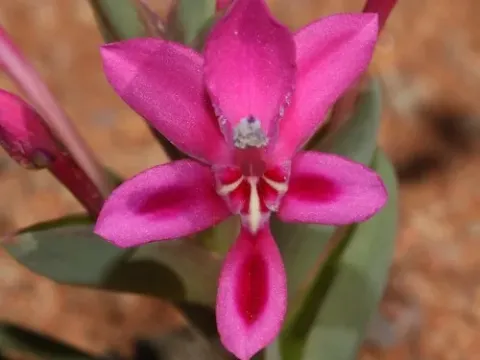
Lapeirousia
Lapeirousia
Planting Lapeirousia bulbs in open ground should be done in the spring, once the soil temperature consistently reaches 10-12 degrees Celsius, typically occurring from April to May.
What the section contains


Lapeirousia
In regions with mild climates, autumn planting is possible, provided that the soil is covered with a layer of mulch to prevent freezing of the corms during winter.
The recommended planting depth for corms is 5 to 8 centimeters, depending on the soil texture and the size of the planting material used.
Spacing between plants should be maintained at 10-15 centimeters to ensure adequate air circulation and sufficient room for the plant to propagate.
For container cultivation, corms can be planted indoors in late winter to facilitate an earlier blooming season when moved outdoors later in the year.
Lapeirousia is a genus within the Iridaceae family, native to arid regions of southern Africa, which explains its preference for sunny and well-drained environments.
This crop requires full sun exposure to produce healthy foliage and vibrant flowers, making it essential to choose an unobstructed planting site.
Well-drained soil is non-negotiable; heavy clay soils should be amended with sand or organic material to improve porosity and prevent moisture-related rot.
During the active growth phase, moderate watering is necessary, but the soil should never become waterlogged or remain constantly damp at the root level.
The plant thrives in slightly acidic to neutral soil types that are rich in nutrients but free of excessive nitrogen, which can lead to lush leaf growth at the expense of flowers.
The most significant threats to Lapeirousia are fungal pathogens, specifically those causing root rot, often triggered by poor drainage or overwatering practices.
Gray mold and other airborne fungal issues can occur if humidity levels remain too high, necessitating good spacing and pruning of affected foliage.
Pests like thrips and spider mites commonly infest these plants, causing stippling or yellowing of leaves and reducing the overall vigor of the plant.
Integrated pest management, including regular inspection and the use of targeted insecticides, is recommended to keep pest populations under control.
Slugs and snails may feed on young sprouts, requiring the use of physical barriers or organic deterrents during the early stages of plant emergence.
After the flowering phase concludes and the foliage begins to turn yellow, the corms should be harvested if the local climate is too cold for outdoor wintering.
Harvested corms must be cleaned of debris and dried in a cool, well-ventilated location to prevent fungal colonization during the storage period.
For optimal results, store the dried corms in paper bags or boxes filled with dry peat or sand in a dark, frost-free environment throughout the winter.
Regular monitoring of stored material is essential to ensure that no corms become soft or moldy, as this can easily compromise the entire stored batch.
The subsequent planting season should involve selecting only firm and disease-free corms, which ensures a higher success rate and vigorous seasonal growth.