
Ligurian saffron
Crocus ligusticus
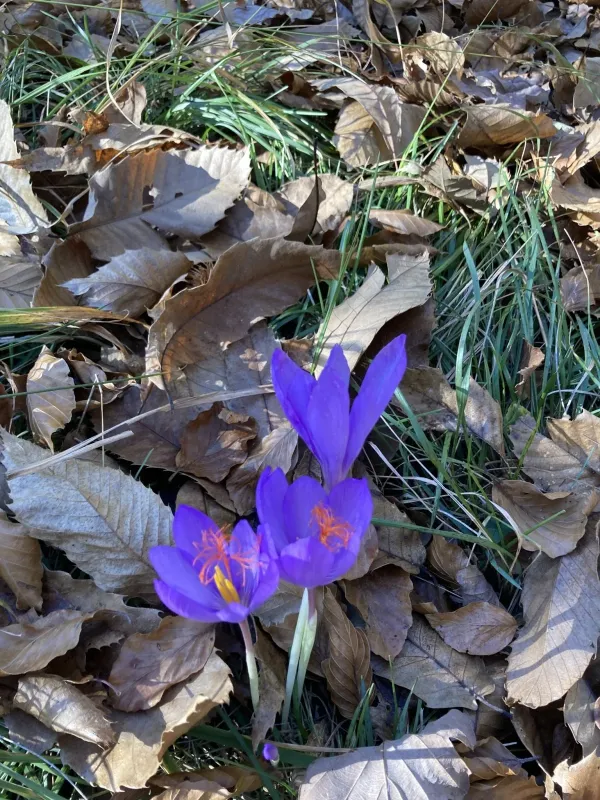
Description
Sowing dates
Planting of Ligurian saffron corms is typically performed in late summer or early autumn, ensuring the root system develops before the winter dormant phase. Proper timing is crucial for survival and future flowering.
Corms should be placed at a depth of 8 to 12 centimeters, depending on the soil texture. Deeper planting is recommended for lighter, sandier soils to provide insulation and prevent premature shooting.
Spacing between plants should be maintained at 10 to 15 centimeters. This distance prevents overcrowding, improves airflow around the foliage, and reduces the risk of fungal infections within the plant population.
Every three to four years, it is necessary to divide and replant the clumps. This practice prevents the depletion of soil nutrients and ensures that individual corms have enough room to reach a healthy size for blooming.
In colder regions, applying a mulch layer of compost or straw can help protect the corms from deep freezes. This organic layer also helps regulate soil moisture levels during the early spring growth phase.
Growing requirements
Ligurian saffron, belonging to the Iridaceae family, requires full sun exposure to thrive. Any form of shading leads to poor growth, weak flower stems, and a reduction in the number of blooms per plant.
Well-drained soil is the most critical factor for success. This plant is highly sensitive to waterlogged conditions, which lead to rapid decay of the corms. Raised beds or sloped terrain are ideal for cultivation.
The ideal soil type is a fertile, loose loam with a neutral to slightly alkaline pH. Excessive clay should be amended with organic matter or grit to improve drainage and aeration, preventing potential root issues.
The species is well-adapted to Mediterranean climates, benefiting from cool, moist springs and warm, dry summers. During the active growth cycle, consistent moisture is beneficial, but summer drought is essential for dormancy.
Fertilization should be handled with care, focusing on potassium and phosphorus to support corm development. High nitrogen levels should be avoided, as they promote excessive leaf growth at the expense of flower production.
Main diseases and pests
Fungal diseases, specifically root rot and Fusarium, are the primary threats to Ligurian saffron. These issues almost always stem from inadequate drainage or overly frequent irrigation during dormant periods.
Rodents such as mice and voles are common pests that feed on the starchy corms during winter. Using physical barriers like underground wire mesh is an effective method to protect the crop from significant losses.
Insects such as thrips and aphids can damage the foliage and flowers, weakening the plant. Regular monitoring of the foliage and the use of targeted biological controls or soaps can mitigate these pest populations.
Nematodes are another persistent threat, causing stunted growth and distorted foliage. Proper crop rotation and the use of healthy, disease-free planting stock are the best defenses against these microscopic pests.
Disease prevention starts with thorough inspection of the planting material. Any corms showing signs of softness, mold, or mechanical damage should be immediately discarded to prevent the spread of pathogens.
Harvesting
The harvest of Ligurian saffron stigmas is a delicate, labor-intensive task that requires manual precision. Harvesting must occur on a dry, sunny morning immediately after the flower opens to ensure high potency.
Once collected, the stigmas must be dried quickly in a controlled environment. Low-temperature dehydration helps preserve the essential oils, aroma, and color, which are the hallmarks of high-quality spice.
Corms are harvested for propagation after the foliage has fully withered and turned yellow. This indicates that the plant has stored sufficient energy and is safely in the dormant state for the next season.
Post-harvest, corms are cleaned of soil and loose husks, then cured in a shaded, well-ventilated area. Curing is a vital process that toughens the outer skin, preventing desiccation and rot during storage.
Storage should take place in a cool, dark, and dry area with moderate airflow. Routine inspection of the stored corms is recommended to remove any that show signs of decay, ensuring the integrity of the stock.