
Ligurian Romulea
Romulea ligustica
Description
Growing requirements
Ligurian Romulea (Romulea ligustica) is a bulbous perennial belonging to the Iridaceae family. Native to the Mediterranean basin, it is typically found in open, stony habitats, meadows, and rocky slopes where drainage is efficient.
The cultural success of this species depends heavily on the soil composition. It requires a substrate that is exceptionally well-drained and gritty to prevent water stagnation, which is the primary cause of bulb decay during the plant's dormant cycle.
Climatic requirements are specific to the Mediterranean type: cool, moist growing seasons followed by hot, arid summers. In cultivation, it is essential to replicate these environmental triggers to ensure the proper physiological maturation of the bulbs.
Agrotechnical management involves strict moisture control. Irrigation should be applied during the active growth phase, generally during the autumn and spring months, and must be entirely withheld once the foliage begins to senescence in early summer.
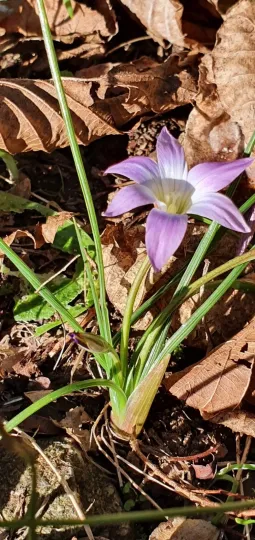
Botanically, the species is characterized by grass-like, filiform leaves and distinct, funnel-shaped flowers. It propagates via seed distribution or through the formation of lateral bulblets, forming small clusters over time when left undisturbed in suitable locations.