
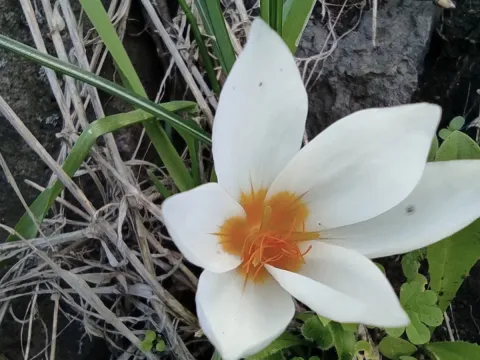
Aleppo saffron
Crocus aleppicus
Aleppo saffron (Crocus aleppicus) is a perennial cormous plant belonging to the Iridaceae family. It is native to the Eastern Mediterranean region, specifically found in countries such as Syria, Lebanon, Israel, and Jordan, growing in rugged, wild terrains.
What the section contains
Aleppo saffron
The plant thrives in rocky, calcareous, and well-drained soils. Its evolutionary development is tuned to the Mediterranean climate, characterized by cool, wet winters and hot, dry summers when the bulb remains dormant in the soil.
Cultivation requires high levels of solar radiation; thus, it should be planted in open, sunny locations. It is intolerant of heavy, compacted soils that do not allow for adequate water percolation, as these quickly induce bulb rot.
For optimal growth, the soil should be lean and gritty. Providing a substrate that mimics natural scree slopes is often the best strategy to ensure longevity and consistent flowering in garden settings.
The plant is recognizable by its narrow leaves with a white central stripe and its white, funnel-shaped flowers that display a vibrant yellow throat and external feathered markings of brown or purple.
Harvesting of corms takes place during the late spring or early summer, following the total senescence of the foliage. Once the leaves have completely dried, the corms can be lifted, cleaned, and stored in a cool, dry environment.
The primary economic use of this plant is within the horticultural and botanical collector trade. While not a commercial source of saffron spice, its early blooming period makes it highly desirable for winter and early spring rock gardens.
Maintenance involves routine division of clumps, which should be performed every few years. This prevents overcrowding, ensures the bulbs receive adequate space to expand, and preserves the vitality of the population.
Propagation is primarily achieved through offsets produced at the base of the mother corm. This vegetative method is reliable and ensures that the genetic integrity of the plant is maintained through successive generations.
When preparing the bulbs for replanting, one should prioritize disinfection with specialized fungicidal treatments. This small intervention significantly reduces the likelihood of soil-borne diseases affecting the new growth cycle.
The most significant threats to Crocus aleppicus are pathogenic fungi that flourish under conditions of poor soil drainage. Rotting of the basal plate is a common cause of failure in garden-grown specimens.
Pests such as small rodents may dig up and feed on the nutrient-rich corms during the dormant period, necessitating protective measures such as the use of wire mesh baskets during initial planting.
Furthermore, infestations by soil-dwelling pests like nematodes can hinder root development. Implementing strict sanitation practices and crop rotation helps to minimize the pressure from these organisms.
To avoid fungal outbreaks, it is essential to ensure that the dormancy period remains dry. Over-watering during the summer months is the most frequent agronomic error when cultivating this species.
Applying a thin layer of decorative grit as a mulch serves as both a biological protection for the corm against overheating and a physical barrier against dampness around the neck of the plant.