
Alatau Crocus
Crocus alatavicus
Description
Growing requirements
The Alatau Crocus (Crocus alatavicus) is a perennial bulbous plant belonging to the Iridaceae family. It originates from the high-altitude mountainous regions of Central Asia, specifically thriving in the rocky terrain of the Alatau mountain range.
This species is perfectly adapted to harsh conditions with high light intensity and significant diurnal temperature variations. It requires extremely well-drained, gritty, or sandy soils to prevent the accumulation of moisture, which is lethal to the bulbs.
For cultivation purposes, it is essential to replicate its natural cycle: a moist, cool spring for growth followed by a hot, dry summer period to ensure the bulb enters dormancy and ripens properly.
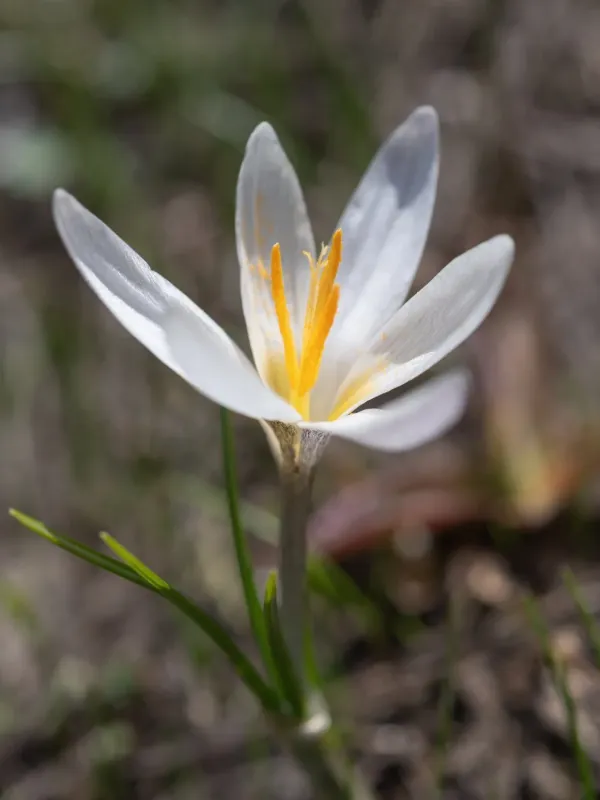
Botanically, Crocus alatavicus is recognized by its early blooming habit, often pushing through the soil just as the snow begins to melt. The flowers are typically white with distinctive purplish or brownish exterior markings on the tepals.
Gardeners use this plant primarily for rock gardens and alpine beds. It propagates through daughter corm offsets or by seeds, although seed production requires patience and specific environmental conditions to reach maturity.
Main diseases and pests
The most significant threat to the Alatau Crocus is rot, specifically basal rot and fusarium, which develop during wet, stagnant conditions. Overwatering is the primary cause of plant failure in garden settings.
Pests such as thrips and aphids can cause damage during the active growing season by feeding on the sap of emerging foliage and flower buds. Early intervention with suitable horticultural soaps or oils is recommended.
Rodents, such as mice and voles, pose a continuous threat to stored corm stocks during the winter months. Protecting the bulbs with wire mesh baskets is a standard and effective agricultural practice.
Weed infestation is a critical issue as the plant has low vigor compared to aggressive grasses and broad-leaved weeds. Manual weeding is preferred to avoid damaging the shallow root systems of the crocus.
Viral diseases, often transmitted by insect vectors, can cause stunted growth or distorted flower patterns. Plants showing systemic infection symptoms should be promptly removed and destroyed to prevent spreading.