
Ankara crocus
Crocus ancyrensis
Description
Sowing dates
The best time to plant the corms is from late summer to early autumn. This timing allows the plant to establish its roots before the ground freezes, which is critical for winter survival.
Planting depth should be approximately 8–10 cm depending on the size of the corm. Ensuring proper spacing of about 5–10 cm allows for better air circulation and prevents overcrowding of the clumps.
Growing requirements
The Ankara crocus (Crocus ancyrensis) is a perennial bulbous plant belonging to the Iridaceae family. Native to the central regions of Turkey, it thrives in rocky mountain habitats and semi-arid meadows.
The cultivation of this species requires well-drained soils, as stagnant water is lethal to its bulbs. A gritty or sandy soil mix is ideal to ensure proper moisture management and oxygen circulation around the root zone.
Being an alpine-origin species, it has specific climatic requirements including cold winters and dry, hot summers. It thrives in full sun exposure, which is essential for the maturation of the corm for the following year's flowering season.
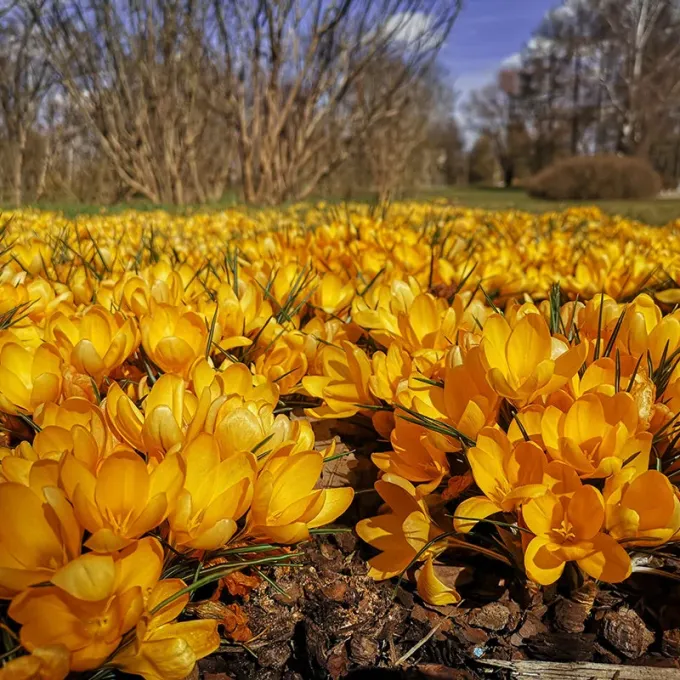
Biologically, the plant features narrow, grass-like leaves and vibrant, deep yellow flowers that bloom in late winter or very early spring. It is a slow-growing species that benefits from minimal soil disturbance once established.
For successful growth, it is recommended to mimic its natural environment. Avoiding summer irrigation is crucial, as the bulbs enter a mandatory dormancy phase once the foliage dies back in late spring.
Main diseases and pests
Pests, particularly voles and mice, are a major threat as they consume the bulbs. Mechanical protection using wire baskets or protective mesh is often required to keep the planting area secure.
Fungal pathogens such as basal rot and Botrytis are the primary diseases affecting the plant. These typically develop in high-humidity conditions or poor soil drainage, highlighting the need for a strict moisture-control regime.
Harvesting
Harvesting or lifting of the bulbs should occur after the foliage has turned yellow and withered. This process indicates that the plant has stored enough energy for the upcoming dormant period.
After lifting, the bulbs should be cleaned of loose soil and stored in a cool, dry, and well-ventilated area. Constant airflow is essential to prevent mold growth during the storage period prior to autumn planting.