
Babiana hybrid
Babiana hybrids
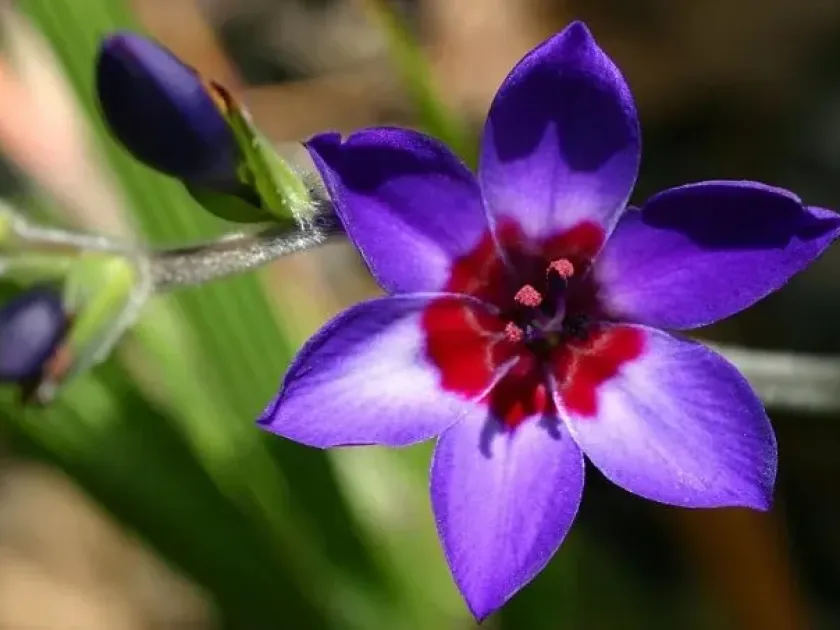
Description
Sowing dates
Planting Babiana hybrid bulbs in open ground is carried out in the spring once the soil has warmed up to 10–12 degrees Celsius. The optimal period usually falls in April or early May, depending on the climate zone.
To accelerate flowering, preliminary sprouting of bulbs in pots starting from late winter is permitted. The room must be well-lit, and the temperature should be maintained around 15 degrees Celsius.
The planting depth for the bulbs is 5–8 centimeters. The spacing between bulbs during mass planting should be at least 10–15 centimeters to ensure adequate ventilation.
When cultivating in containers, planting can be done earlier using a loose, well-draining substrate. It is crucial to avoid waterlogging the soil until the first sprouts emerge.
After planting, it is recommended to mulch the area to retain moisture and prevent weed growth, which can compete with the young plant for essential nutrients.
Growing requirements
Babiana hybrid belongs to the Iridaceae family and originates from the southern regions of Africa, which determines its high demand for sunlight. The plant requires open, well-lit areas without shading.
Soils must be light, permeable, and fertile. Sandy loam or loamy substrates with a neutral or slightly acidic reaction, rich in organic components, are ideal for cultivation.
The crop is extremely sensitive to water stagnation; therefore, when planting in heavy soils, it is mandatory to create a drainage layer using sand or fine gravel.
The temperature regime must be moderately warm during the growing season. Babiana does not tolerate frost, so when temperatures drop below zero, the plants require protection or excavation.
During the active growth period, the crop needs regular but moderate watering. Constant waterlogging of the soil leads to bulb rot, so the top layer of soil should dry out between waterings.
Main diseases and pests
The main danger for Babiana is fungal diseases that develop in conditions of high humidity and poor ventilation, such as gray mold.
If bulbs are stored incorrectly during the winter period, they may be affected by mold fungi. It is important to provide a dry and cool place with constant air circulation.
Among pests, thrips cause the most damage, sucking juices from the leaves and leading to deformation. Systemic insecticides are used to control these pests.
The plant may also be affected by spider mites in hot and dry weather. Regular inspection of the underside of leaves allows you to notice the problem in time and apply acaricides.
- Following crop rotation practices.
- Disinfecting planting material before storage.
- Monitoring soil moisture levels carefully.
- Removing plant debris in the autumn.
- Applying fungicides at the first sign of infection.
Harvesting
Bulb harvesting is carried out in the autumn after the natural decay of the above-ground part of the plant. This usually occurs in late September or October, before the first significant frosts.
After digging up, the bulbs are cleaned of soil, carefully inspected for damage, and dried in a place protected from direct sunlight at room temperature.
For storage, paper bags or boxes filled with dry sand are used. The air temperature in the storage room should be around 10–12 degrees Celsius.
During storage, the bulbs must be checked periodically, removing any specimens showing signs of rot or decay to prevent the contamination of the entire collection.
Proper harvesting and preparation of bulbs for wintering are the keys to successful flowering in the following season and a high multiplication rate.