
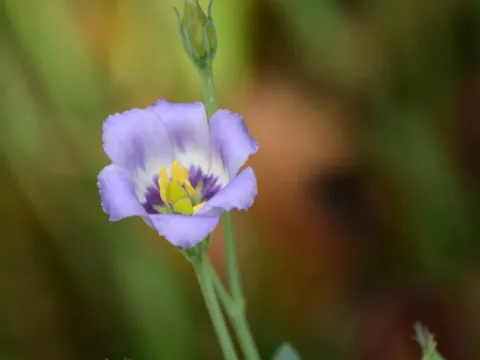
Eustoma
Eustoma
Eustoma (Eustoma grandiflorum) is a herbaceous plant belonging to the Gentianaceae family. In commercial scale production, sowing is primarily conducted during the winter months, from December to February, to secure high-quality cut flowers for the summer season.
What the section contains
Eustoma
Eustoma seeds are extremely small, necessitating surface sowing without covering, typically using plug trays. It is essential to maintain high humidity levels during the germination phase, as substrate desiccation is fatal to the young seedlings.
Artificial lighting is employed to accelerate germination, providing a photoperiod of 14–16 hours. The optimal temperature for emergence ranges between +20°C and +25°C.
The process of transplanting or potting up seedlings requires extreme care due to the plant's delicate root system. The crop is characterized by slow development in the early stages, making early sowing a critical management decision.
Modern professional hybrid cultivars allow growers to manipulate flowering schedules by selecting specific series adapted to varying light intensities and temperature regimes.
The crop has high requirements regarding substrate quality: the soil must be light, well-drained, and have a neutral pH level (6.0–7.0). Excessive soil acidity often leads to significant growth retardation.
Eustoma is light-demanding, yet in hot summer months, it requires shading to prevent leaf scorch and overheating of the root system. The optimal temperature for vegetative growth is +18°C to +22°C.
The plant is highly sensitive to irrigation: water stagnation must be avoided to prevent root rot. Utilizing drip irrigation allows for the maintenance of optimal moisture levels without over-saturating the aerial parts of the plant.
A crucial growth factor is the availability of balanced mineral nutrition. During the active growth phase, complete fertilizers with a nitrogen bias are applied, transitioning to high-potassium and phosphorus formulas prior to bud initiation.
Greenhouse ventilation is a mandatory requirement for preventing fungal diseases. High humidity combined with stagnant air creates ideal conditions for pathogen proliferation.
The primary threats to Eustoma are fungal diseases, with Fusarium wilt, Botrytis blight, and Phytophthora being the most common. Excessive substrate moisture and high air humidity significantly contribute to the development of these rots.
Pests, particularly thrips, are major enemies of Eustoma. They not only damage foliage and blooms but also serve as active vectors for viral diseases, which are effectively impossible to treat.
Aphids and whiteflies also frequently infest the crop, feeding on sap from young shoots. Systemic insecticides are applied during the active vegetative stage, stopping before the flower buds begin to open.
Disease prevention includes strict crop rotation, greenhouse disinfection between seasons, and meticulous monitoring of substrate purity. The use of fungicides must be strictly regulated and documented.
Leafminers are another group of insect pests whose larvae tunnel through leaf tissues, reducing the commercial aesthetic value of the cut flowers. Regular monitoring using sticky traps helps in early identification and management.
Eustoma harvesting occurs when at least two to three flowers on the stem are open, while the remaining buds are still firm. This ensures superior transportability and longevity in the vase.
Harvesting is recommended during the early morning hours when plant turgor is at its peak. Stems are cut with sharp tools just above a node to encourage the development of lateral shoots.
Following harvest, stems are immediately placed in clean water supplemented with specialized flower food to prevent bacterial growth in the vase, significantly extending the flower's life.
Transportation is carried out in a vertical position at a controlled temperature of +4°C to +6°C. Eustoma is ethylene-sensitive; therefore, storage with ethylene-producing products must be avoided.
Post-harvest processing includes grading based on stem length and the number of open blooms. Eustoma remains one of the most sought-after crops in floristry due to its durability and aesthetic appeal.