
Pachyphytum viride
Pachyphytum viride
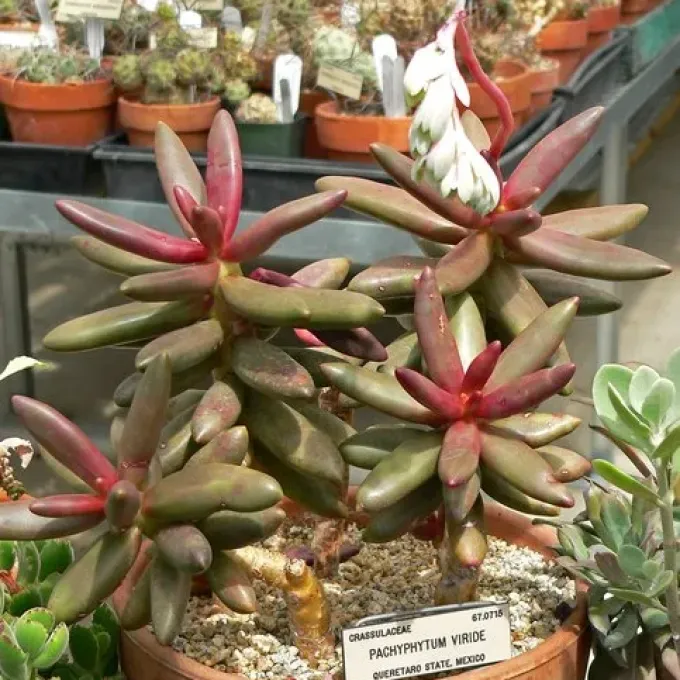
Description
Growing requirements
Pachyphytum viride is a distinct member of the Crassulaceae family. Native to the rocky terrains of Mexico, this succulent has evolved to survive in environments characterized by long periods of drought and high exposure to sunlight.
Cultivation of this plant requires bright, filtered light. While it thrives in sunshine, direct exposure during the peak heat of the day can damage the waxy cuticle of the leaves, so providing light shade during high summer is recommended.
The soil requirements are strict: the medium must be highly porous and inorganic. A standard mixture for Pachyphytum includes coarse sand, pumice, and a small amount of peat, ensuring that water drains almost immediately to protect the root system.
Temperature management is key to successful development. During the growth season, it prefers warm temperatures between 20°C and 25°C. A cooler dormant phase during winter, ranging from 10°C to 12°C, helps prevent etiolation.
Watering practices should be governed by the "soak and dry" method. The substrate must be completely desiccated before the next irrigation. Overwatering is the most common cause of plant failure, leading rapidly to cellular collapse and necrosis.
Main diseases and pests
The primary threat to Pachyphytum viride is fungal infection resulting from excessive moisture in the root zone. Root rot and stem rot are pervasive issues if the drainage is inadequate or if the plant remains in a humid environment for too long.
Pests such as mealybugs represent a significant challenge. These small insects tend to hide in the tight spaces between leaves and at the base of the rosette, where they extract sap and leave behind white, cotton-like residue.
Spider mites are another potential threat, particularly in environments with poor air circulation and low humidity. An infestation can be identified by fine webbing and small, discolored spots on the surface of the succulent's leaves.
Preventative care involves consistent inspection of the plant's health and regular monitoring for early signs of infestation. Keeping the area around the plant clean and removing debris from the pot surface reduces the habitat for pests.
When chemical treatment is required, systemic insecticides or fungicides should be applied carefully. It is vital to avoid applying concentrated oils or strong chemicals directly to the succulent leaves, as they can permanently damage the plant's natural bloom.