
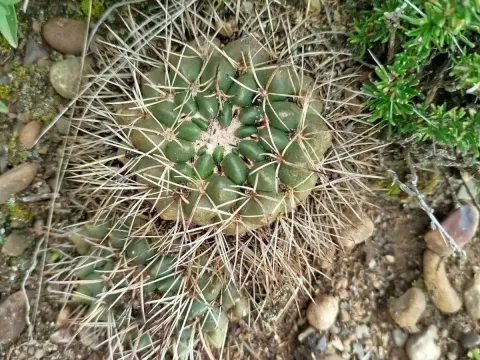
Neowerdermannia
Neowerdermannia
Neowerdermannia is a genus of cacti belonging to the Cactaceae family. These rare plants are native to the high-altitude regions of the Andes, specifically found in Bolivia, Chile, and Argentina, where they endure extreme environmental conditions at high elevations.
What the section contains


Neowerdermannia
The morphology of Neowerdermannia typically features a globular to flattened stem that often sits partially submerged in its natural rocky soil. The plants are covered in distinct tubercles and feature sharp, sturdy spines that protect the stem and aid in water conservation.
In cultivation, these cacti are considered challenging and require a highly inorganic substrate. A mixture of gravel, perlite, and a small amount of lean soil is essential to ensure rapid drainage, as any water accumulation around the roots is detrimental to their health.
Neowerdermannia requires full sun exposure to maintain its compact growth form and structural integrity. A lack of light will result in etiolation, making the plant significantly more vulnerable to pests and opportunistic infections that exploit weakened tissues.
Temperature management is critical, with a distinct cool dormancy period required during winter months, usually ranging from 5 to 10 degrees Celsius. During this time, the plant must remain completely dry to avoid dormant-season decay.
Root and stem rot are the primary threats to the survival of Neowerdermannia in collections. These are almost exclusively caused by overwatering or the use of heavy, moisture-retaining potting media, leading to fungal colonization of the vascular system.
Mealybugs are the most persistent pest for this genus, as they tend to congregate in the deep crevices between tubercles where they are protected from manual removal. Consistent monitoring is necessary to identify early-stage infestations.
Red spider mites represent another significant threat, particularly in greenhouses with poor airflow and low humidity. Infestations typically manifest as discolored patches on the skin, which can become permanent scars if not treated promptly with miticides.
Integrated pest management, including systemic insecticides and good ventilation, is recommended for long-term health. It is essential to ensure that any chemical treatment is applied during lower temperatures or away from direct intense sunlight to prevent leaf burn.
Sanitary practices are paramount: sterilizing tools between tasks and ensuring the surrounding environment is kept clean helps minimize the risk of pathogen transmission. Always inspect new acquisitions thoroughly before introducing them to an existing collection.