
Werauhia hygrometrica
Werauhia hygrometrica
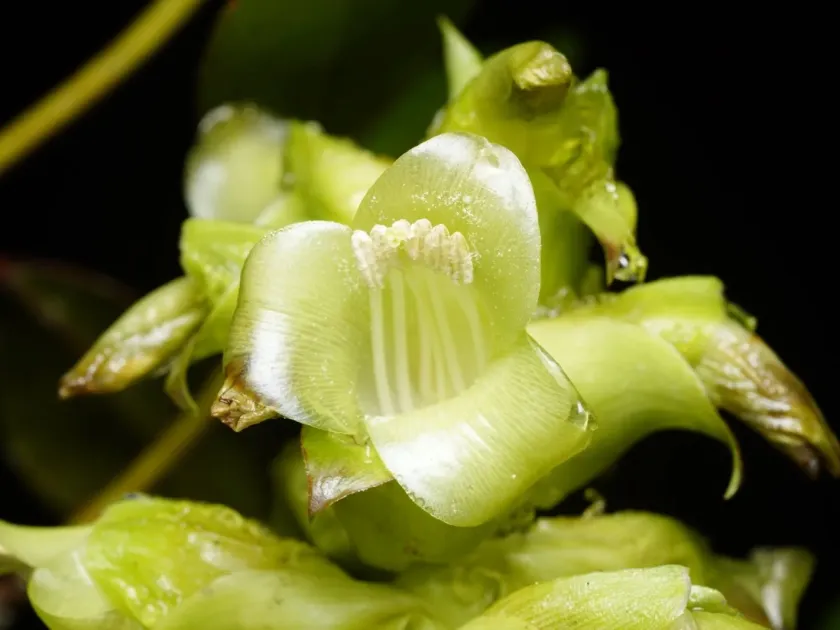
Description
Growing requirements
Werauhia hygrometrica is a botanical species belonging to the Bromeliaceae family. Native to the tropical forests of Central and South America, it functions as an epiphyte, naturally attaching itself to tree branches and trunks to access filtered light and atmospheric moisture.
To cultivate this plant successfully, one must replicate its natural habitat requirements. High humidity levels, ideally maintained between 70% and 80%, are essential for the health of the foliage, while temperatures should remain stable between 20 to 25 degrees Celsius to encourage steady growth.
The choice of growing medium is critical for epiphyte health. Standard garden soil is unsuitable; instead, a loose, airy substrate consisting of pine bark, sphagnum moss, and charcoal is required. This ensures that the root system, which is mainly used for anchorage, does not suffer from oxygen deprivation.
Watering practices differ from terrestrial crops. Water is typically applied directly into the central tank formed by the rosette of leaves. It is essential to use soft, chlorine-free water to prevent mineral buildup and necrosis on the sensitive leaf tissues of the plant.
In terms of хозяйственное (economic) use, Werauhia hygrometrica serves as a high-value ornamental crop. Its unique structural appearance makes it a popular choice for botanical gardens, interior landscaping, and specialized terrariums, contributing to the aesthetics of indoor tropical environments.
Main diseases and pests
The most significant threat to Werauhia hygrometrica is improper water management. Water stagnation in the substrate or the use of heavy, water-retentive media frequently leads to root rot and fatal fungal infections that quickly decay the plant's basal structure.
Pest management is equally challenging. Scale insects and mealybugs frequently infest the leaf axils, hiding deep within the rosette and making manual control or localized treatment difficult. Low humidity also encourages spider mite outbreaks, which can cause significant damage to the leaf cuticle.