
Brocchinia acuminata
Brocchinia acuminata
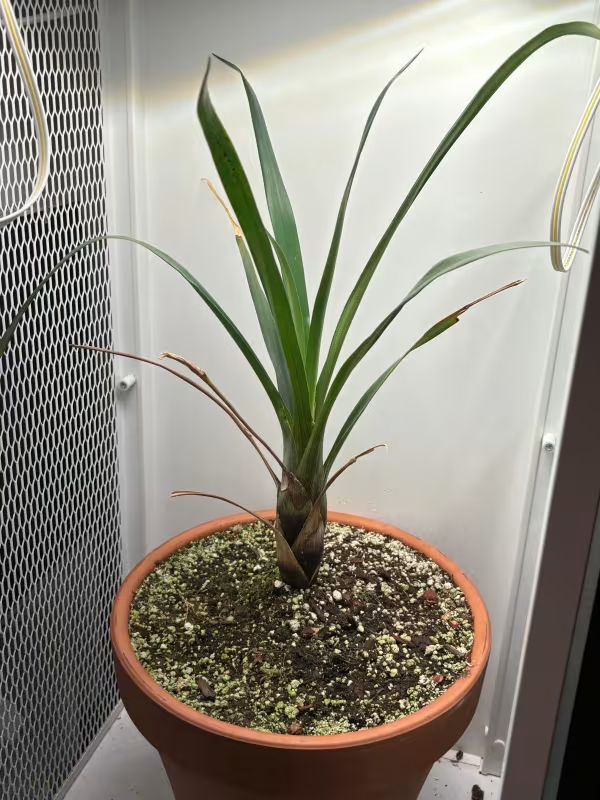
Description
Growing requirements
Brocchinia acuminata is an intriguing species within the Bromeliaceae family, originating from the humid tropical regions of South America. This culture is renowned for its specialized rosette structure that functions as a natural water reservoir in its native environment.
Botanically, the plant features elongated, acute leaves that allow it to capture moisture and nutrients directly from rain and debris. Its root system is primarily used for anchoring the plant rather than traditional nutrient uptake, reflecting its evolutionary adaptation to epiphytic conditions.
Regarding climate, this species demands warm temperatures ranging between 22 and 28 degrees Celsius, with high humidity levels. It cannot tolerate sudden drops in temperature, which can cause severe physiological stress and potentially lead to stunted growth or death.
Soil requirements focus on extreme drainage and aeration. A mixture comprising pine bark, perlite, and sphagnum moss is ideal for simulating the natural habitat. The medium should be slightly acidic to ensure optimal nutrient absorption through the foliage.
Agrotechnical maintenance includes consistent watering with soft, purified water. Since the plant collects water in its central tank, regular flushing of this reservoir is necessary to prevent the accumulation of minerals and decomposition of trapped organic matter.
Main diseases and pests
The primary threats to Brocchinia acuminata are fungal pathogens, specifically those causing crown rot. These infections thrive when stagnant water remains in the central rosette during cooler periods or in environments with poor air circulation.
Pest infestations, particularly spider mites and mealybugs, are frequent challenges in greenhouse or indoor cultivation. These pests thrive in dry conditions and can quickly weaken the plant by feeding on the sap of the tender inner leaves.
Prevention involves maintaining high ambient humidity and ensuring adequate air movement around the plant foliage. Regular inspection of the leaf axils is crucial, as mealybugs tend to hide in these protected, moist areas where they are difficult to reach.
Chemical treatments should be approached with caution, as Bromeliads can be sensitive to heavy synthetic residues. Using horticultural oils or neem-based solutions is generally recommended for managing pest populations without damaging the delicate plant tissues.
Root health should be monitored periodically to ensure the growing medium hasn't compacted too much. If rot is detected, immediate removal of affected tissue and re-potting in fresh, sterile substrate is the only way to save the specimen.