
Desmoncus orthacanthus
Desmoncus orthacanthus
Description
Growing requirements
Desmoncus orthacanthus is a distinctive climbing palm species belonging to the Arecaceae family. This tropical plant is native to the rainforest ecosystems of Central and South America, where it thrives in humid environments.
The plant requires high humidity and consistent tropical temperatures to maintain steady growth rates. It is strictly adapted to forest-dwelling environments, relying on tall trees for structural support as it reaches towards the forest canopy.
Soil requirements for this palm include deep, nutrient-rich substrates with excellent drainage. Although it requires high moisture levels, the root system must not be subjected to prolonged waterlogging to avoid physiological stress.
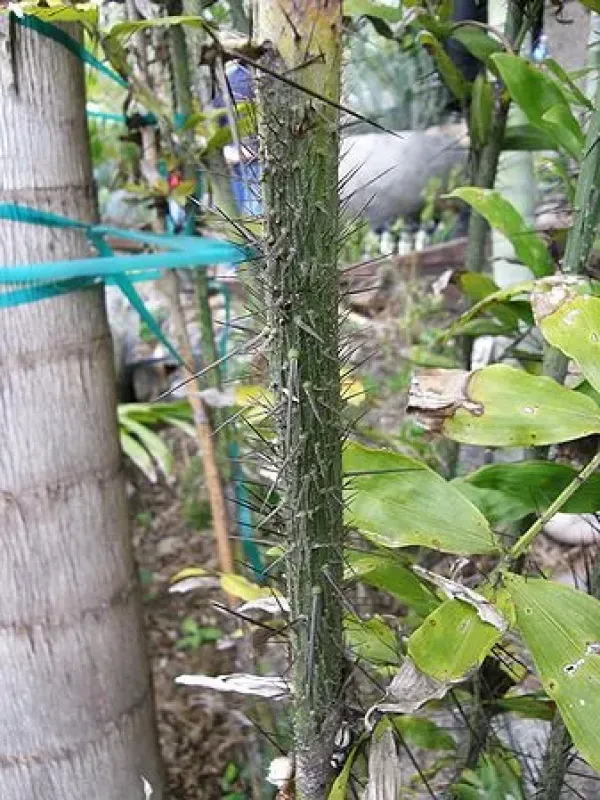
Morphologically, the plant is characterized by its long, slender, and flexible stem, which is covered in sharp spines. These spines serve as an evolutionary defense mechanism and assist the plant in anchoring itself to host trees through its specialized leaflets.
Economically, this species is highly valued as a source of raw material for the rattan industry. The durability and flexibility of its stems make it a sustainable alternative to traditional rattan palms, provided it is harvested with ecological considerations.
Main diseases and pests
The primary threats to Desmoncus orthacanthus populations include habitat fragmentation and large-scale deforestation. When host trees are removed, the plant cannot support its weight, leading to stunted growth or death.
Fungal pathogens represent a significant biological threat, especially in stagnant air conditions within dense forest patches. These infections can degrade the quality of the stems, rendering the harvested material useless for commercial weaving purposes.
Insect pests, including wood-boring beetles and sap-sucking insects, are prevalent in their native range. These pests can compromise the integrity of the stem structure, causing localized tissue necrosis and reducing overall fiber quality.
Competition for light is a constant ecological pressure, as the plant must compete with other fast-growing tropical vines and epiphytes. Without adequate exposure to dappled sunlight, the rate of stem lignification decreases significantly.
Over-harvesting practices by local collectors often exceed the natural regeneration rate of the population. Sustainable management requires implementing rotational harvest systems that allow the mother plant to survive and produce new shoots over multiple seasons.