
Desmoncus mitis
Desmoncus mitis
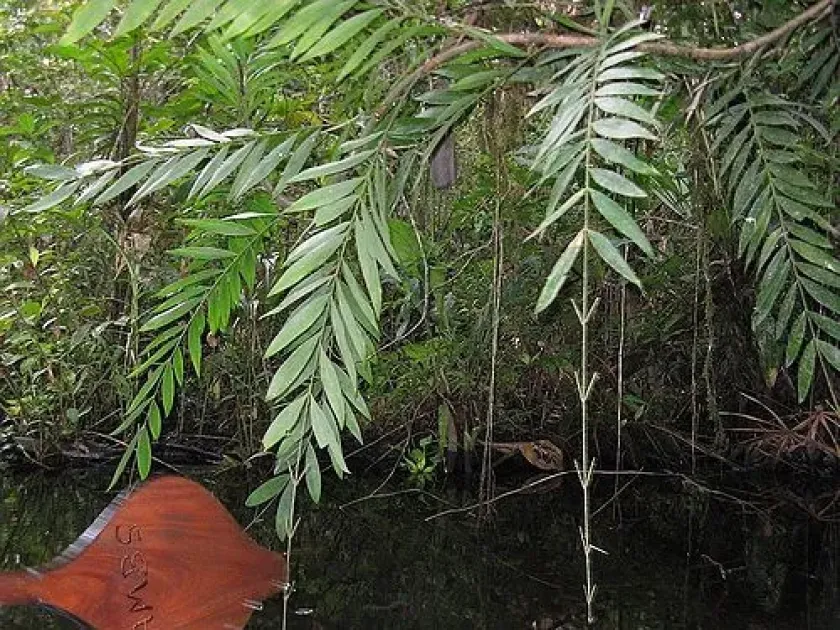
Description
Growing requirements
Desmoncus mitis is a specialized climbing palm species belonging to the Arecaceae family. It is characterized by its slender, flexible stems equipped with hooked spines, allowing it to climb through the dense tropical forest canopy.
Native to Central and South America, this plant thrives in humid, lowland tropical environments. It is adapted to high-rainfall areas and does not have a distinct dormancy period, requiring consistent moisture to maintain its rapid growth rate.
The plant requires deep, fertile soils that are rich in organic matter and possess excellent drainage capabilities. It is highly sensitive to waterlogged conditions, which can lead to rapid root decay and plant mortality.
Regarding climate, Desmoncus mitis demands year-round warmth, as it is intolerant of frost or significant temperature drops. It grows best in environments where the ambient temperature remains between 22°C and 28°C throughout the year.
Shade management is crucial in agricultural settings, as the plant naturally grows in the dappled light of the forest understory. Exposing the palm to intense, direct tropical sunlight often results in leaf scorching and restricted development.
Harvesting
The primary agricultural interest in Desmoncus mitis lies in the extraction of its flexible, durable stems, which are harvested as a sustainable alternative to traditional rattan. These fibers are highly valued for their resilience in artisan manufacturing.
Harvesting is performed manually by skilled workers who selectively remove mature, hardened stems. This sustainable practice ensures that the apical meristem remains undamaged, allowing the plant to continue growing after the harvest.
Post-harvest processing involves stripping the protective spines and the outer foliage from the stems immediately. This is essential to prevent insect damage and to facilitate the drying process before the material hardens.
The stems are then air-dried in covered, well-ventilated areas to remove excess internal moisture. Proper drying is a critical phase that dictates the flexibility and longevity of the final product used in furniture or basketry.
The resulting material is renowned for its strength-to-weight ratio. By managing these plants through systematic agroforestry, producers can achieve a consistent yield of high-quality fiber while preserving the local forest ecosystem.