
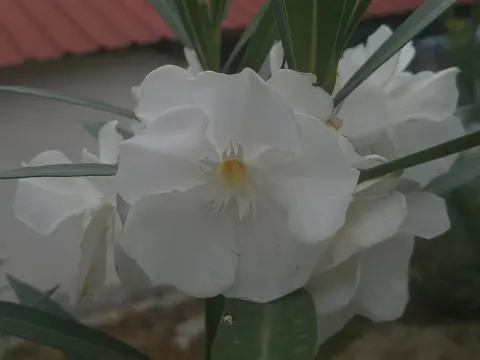
Oleander
Nerium L.
Oleander (Nerium oleander) is a robust evergreen shrub belonging to the Apocynaceae family. Native to the Mediterranean region, it has adapted to diverse environments ranging from riverbeds to arid rocky slopes.
What the section contains

Oleander
This species is strictly photophilous, requiring full sun exposure to reach its maximum blooming potential. Inadequate lighting results in weak, leggy growth and significantly reduced flower production throughout the season.
The ideal growing medium for oleander is a well-draining, nutrient-rich loam. While it is tolerant of various soil types, maintaining a neutral to slightly alkaline pH level promotes healthier foliage and more vigorous overall development.
Oleander is highly sensitive to frost, making it suitable for outdoor cultivation only in USDA hardiness zones 8 and above. In colder climates, it must be grown in containers and brought indoors before the first autumn frost.
Due to its resilience, the plant is widely utilized in industrial and roadside landscaping. Gardeners should keep in mind that every part of the plant is toxic, so appropriate care must be taken during pruning or handling.
Scale insects are among the most persistent pests affecting oleander. They form hard protective shells on the stems and leaf undersides, drawing sap from the vascular system and potentially leading to branch dieback.
Spider mites thrive in hot, dry conditions and can quickly infest the foliage. Infestation is indicated by stippling patterns on the leaves and fine webbing, which necessitates regular misting and the use of miticides.
Mealybugs, identified by their white, waxy secretions, tend to congregate in the axils of the leaves. If left untreated, they can cause bud abortion and stunted growth, weakening the plant's structural integrity.
Oleander knot, caused by the bacterium Pseudomonas syringae, manifests as characteristic galls or warts on the branches. Strict sanitary measures, including the destruction of infected material, are essential to stop the spread.
Root rot is typically associated with poor drainage or excessive watering. Ensuring that the soil dries out slightly between irrigation cycles is the primary method for maintaining healthy, vigorous roots in container-grown specimens.