
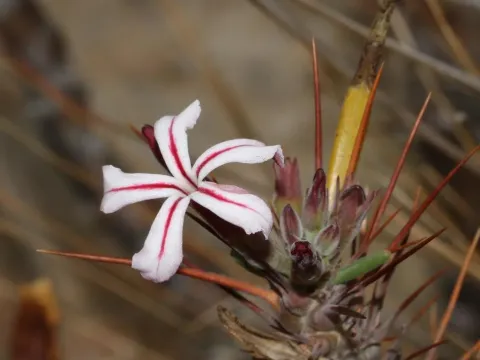
Pachypodium
Pachypodium
Pachypodium is a genus of stem succulents belonging to the Apocynaceae family. These plants are native to the arid environments of Madagascar and southern Africa, where they have evolved to store water in their thickened trunks.
What the section contains

Pachypodium
The cultural requirements for this plant emphasize high light intensity. It thrives in direct sunlight, which is necessary to maintain the plant's characteristic structure and healthy thorns, especially during the active growing season.
Irrigation must be strictly managed to mimic the plant's natural habitat cycle. During the hot season, moderate watering is required, while in the dormant winter period, the plant requires almost completely dry soil to prevent root issues.
Soil composition should be extremely well-draining, typically consisting of a mix of pumice, coarse sand, and a small portion of organic matter. A lack of proper drainage is the most common cause of crop failure in greenhouse cultivation.
The primary use of Pachypodium species is in ornamental horticulture and botanical collections. Due to the presence of toxins in the sap, they are not used for agricultural production or fodder, serving strictly as aesthetic specimens.
Root rot is the most serious threat, typically triggered by cold, damp soil conditions. Once the rot reaches the main stem, the plant often becomes impossible to save without surgical removal of affected parts.
Pests such as mealybugs and spider mites frequently infest these plants in enclosed conditions. These pests hide near the spines and thorns, requiring targeted insecticide application or physical removal to maintain plant vigor.