
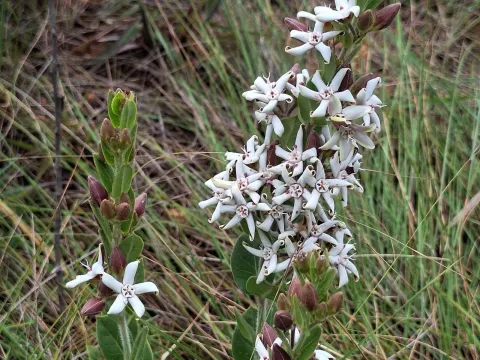
Oxypetalum
Oxypetalum R. Br.
Oxypetalum, widely known in the ornamental trade as Tweedia caerulea, is typically grown from seeds. Sowing usually begins in late winter or early spring, specifically in February or March, requiring an ambient temperature of 20–22 degrees Celsius to ensure high germination rates.
What the section contains


Oxypetalum
For successful seed germination, a light, well-draining substrate enriched with perlite or vermiculite is essential. Seeds should be sown at a shallow depth of no more than 0.5 cm, as they need a stable environment with consistent, yet not excessive, moisture levels to sprout effectively.
Seedling transplanting occurs when the first two true leaves appear. Plants are moved into individual pots, typically 9–10 cm in diameter, using a gentle handling method. The roots of Oxypetalum are sensitive to disturbance, so preserving the root ball during transition is critical for growth.
Transplanting to the open field is performed only after all risks of frost have passed, usually in late May or early June. The crop thrives in well-warmed soil, which accelerates establishment and encourages vigorous development of the stems throughout the main growing season.
In professional flower production, a planting density of 16–20 plants per square meter is standard. This spacing promotes proper airflow between plants, which is crucial for preventing humidity-related diseases and facilitating routine maintenance operations.
Belonging to the Apocynaceae family, Oxypetalum originates from the subtropical regions of South America. To flourish, it requires a sunny location protected from strong winds, as its stems are relatively fragile and prone to damage under harsh weather conditions.
The crop demands a high-quality, well-draining, and fertile soil with a neutral or slightly acidic pH. Waterlogging is detrimental to this species, as it often leads to root rot; therefore, providing an excellent drainage system is non-negotiable for large-scale agricultural success.
While the plants need consistent moisture, especially during the blooming phase, they must not be over-watered. Irrigation should be applied at the base, keeping the foliage dry to minimize the incidence of fungal pathogens that thrive in wet conditions.
The ideal temperature range for Oxypetalum is between 18 and 25 degrees Celsius. Growth slows significantly if temperatures drop below 10 degrees, making greenhouse or covered cultivation preferable in regions with cooler, unpredictable summer climates.
Nutrient management involves applying balanced fertilizers every two weeks, focusing on phosphorus and potassium to enhance flower color and stem strength. Regular feeding ensures high-quality blooms, which are the primary value proposition for this ornamental crop.
Common pests affecting Oxypetalum include aphids and spider mites. Aphids typically cluster on the tender tips and buds, causing significant deformation, while spider mites proliferate in dry air conditions, leading to leaf discoloration and stunted plant health.
Integrated pest management strategies involve regular monitoring and the use of systemic insecticides or miticides. Early detection and proactive intervention are key to maintaining a healthy crop and preventing infestations from spreading across the production site.
Fungal diseases, including root rot and powdery mildew, are major risks in poorly ventilated or excessively humid environments. Maintaining strict hygiene and controlling the irrigation schedule are the most effective preventive measures against these pathogens.
Botrytis (gray mold) can pose a threat during periods of prolonged rainfall or high humidity. Infected plant parts must be removed immediately to stop the spread, followed by the application of appropriate fungicides to protect the remaining crop from further infection.
- Regular weeding to improve overall field hygiene and airflow.
- Sanitization of all harvesting tools to avoid cross-contamination.
- Frequent inspections of the underside of leaves for early pest signs.
Harvesting for the floral market occurs when the first buds in the cluster start showing color but have not fully opened. The best time for harvest is early morning, when the plant's cell turgor is at its peak, ensuring maximum post-harvest longevity.
The stems exude a milky latex that can block water intake if not properly managed. Immediately after cutting, stems should be dipped in hot water (70–80 degrees Celsius) for a few seconds to seal the cut and maintain proper hydration levels.
Post-harvest, the stems are placed in clean water supplemented with floral preservatives. Proper storage at temperatures between 5 and 8 degrees Celsius is essential to preserve the blooms for 10–14 days, satisfying consumer quality expectations.
Grading is based on stem length, uniformity, and the stage of opening. High-quality stems must be free of pest damage or leaf spotting, as these are the primary factors assessed by wholesale buyers and floral designers during the procurement process.
Transport must be conducted with care, keeping stems upright to avoid bending or physical trauma to the delicate flowers. Maintaining the cold chain during transit is critical to delivering a premium product to the final market destination.