
Pachypodium ambongense
Pachypodium ambongense
Description
Growing requirements
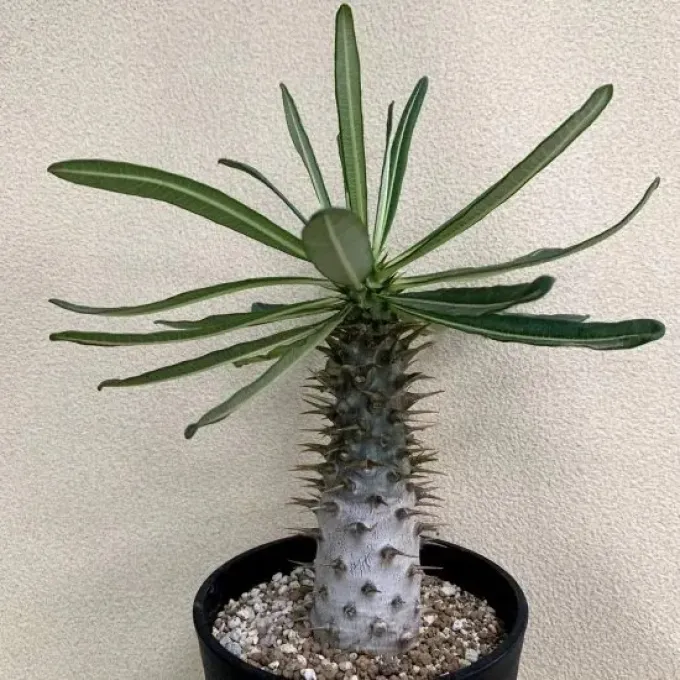
Pachypodium ambongense is a rare succulent species belonging to the Apocynaceae family. Native to the dry, limestone areas of Madagascar, this plant has adapted to survive in challenging, rocky environments by developing a thickened, water-storing stem known as a caudex.
Botanically, it is recognized by its slow-growing, deciduous nature and sharp, paired spines that protect the stem. During the growing season, it produces elegant, fragrant white flowers that are a signature trait of the genus Pachypodium, making it highly desirable among collectors.
The cultural requirements are strict: the plant needs intense, bright light to maintain its compact form. Indoors, it should be placed in the sunniest spot available, while in greenhouses, supplemental lighting may be necessary during overcast periods to simulate its native habitat.
The substrate must be highly porous and inorganic. A professional mix usually consists of pumice, perlite, coarse sand, and a small portion of potting soil to prevent water stagnation. Proper drainage is the most critical element of the plant's long-term survival in containers.
Watering requires a seasonal approach: generous hydration during the active summer growth phase and almost complete drought during the winter dormant season. This cycle is essential to prevent physiological stress and to trigger the plant's natural flowering processes.
Main diseases and pests
Root rot is the most significant threat to Pachypodium ambongense. It is almost always caused by overwatering or using a medium that stays wet for too long, leading to the collapse of the caudex tissues from the inside out, which is often difficult to treat once discovered.
Spider mites are the most common pests, particularly when the ambient air is hot and dry for extended periods. They feed on the tender, developing leaves, leading to yellowing, distortion, and potential loss of the foliage, which weakens the plant's overall energy storage.
Mealybugs can also infest the plant, settling into the crevices between the spines or the leaf bases. Because the plant is sensitive to harsh chemicals, manual removal with isopropyl alcohol or systemic treatment is recommended to avoid chemical burns on the succulent stem.
Good hygiene in the cultivation area is necessary to prevent the buildup of fungal spores. Removing fallen, dead leaves promptly is crucial, as they can harbor pathogens that might spread to the main stem under humid conditions.
It is important to handle this plant with care due to its spines and toxic latex. Any pruning or damaged areas should be allowed to callus over completely before watering to prevent rot from entering the open wounds, ensuring the plant remains healthy throughout the year.