
Hoodia gordonii
Hoodia gordonii (Masson) Sweet ex Decne.
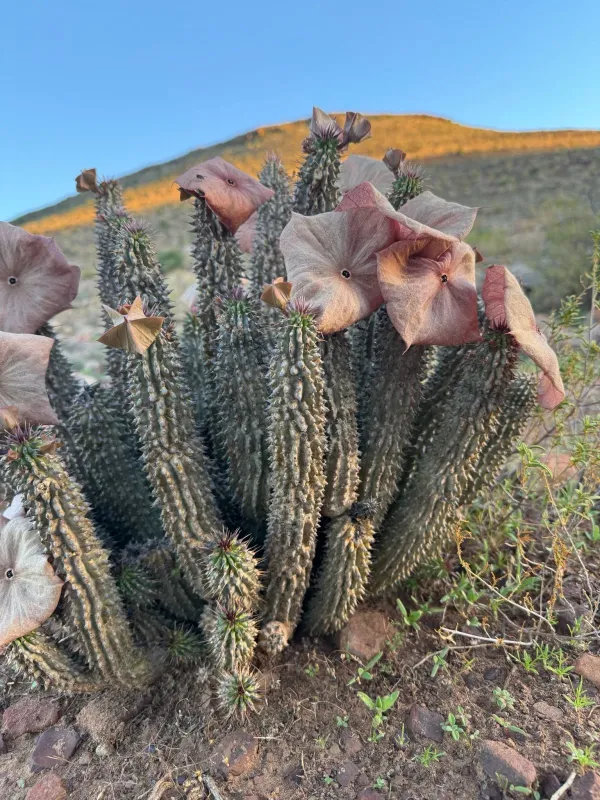
Description
Growing requirements
Hoodia gordonii is a succulent perennial plant belonging to the Apocynaceae family. Often mistaken for a cactus due to its spiny, succulent stems, it is biologically distinct and adapted to survive in extreme desert environments through specialized water storage mechanisms.
The plant is native to the arid regions of Southern Africa, predominantly in the Kalahari Desert. Its natural habitat is characterized by poor sandy soils, high solar radiation, and extreme variations in day and night temperatures, which have shaped its unique physiology.
Successful cultivation requires soil with high drainage capacity. A mixture consisting of 50% coarse sand, 25% pumice or perlite, and 25% low-nutrient organic matter is ideal. High soil porosity is essential to prevent root rot, which is the primary cause of failure in agricultural production.
The climate requirements include high light intensity and temperatures ranging from 20°C to 35°C. Hoodia gordonii is highly sensitive to cold and damp conditions; even mild frost or prolonged exposure to high humidity can lead to irreparable physiological damage.
Agricultural management revolves around a strict water regime. Watering should only occur during the growing season when the substrate is completely dry. In the dormant period, the plant requires almost zero water to mimic the desert drought cycle, which is crucial for chemical synthesis.
Main diseases and pests
The most significant threats to Hoodia gordonii are pathogens caused by improper irrigation. Fungal infections, particularly Pythium and Phytophthora, target the root system and the base of the stems, causing rapid decay of the plant's succulent tissues.
Pests such as mealybugs and spider mites are common in greenhouse conditions. These insects thrive in dry environments and can quickly infest stems, causing yellowing and stunted growth. Regular inspection and systemic insecticide treatments are necessary to maintain crop health.
Another major threat is root rot induced by soil compaction. When the substrate becomes too dense, it loses its ability to breathe, leading to anaerobic conditions that are fatal to the plant. Using sterilized, loose mineral media prevents the introduction of soil-borne pathogens.
The plant is also susceptible to physiological stress if there is a sudden change in light levels. If moving plants from low-light to high-light environments, gradual acclimation is required to prevent sunburn on the stems, which can then become sites for secondary bacterial infections.
Integrated Pest Management (IPM) protocols should be strictly followed, prioritizing ventilation and controlled moisture levels over chemical intervention. Keeping the environment arid and well-circulated is the most effective defense against the majority of biological threats for this species.