
Hemidesmus
Hemidesmus
Hemidesmus is a genus of plants belonging to the Apocynaceae family, widely known for its flagship species Hemidesmus indicus. It is a perennial twining or trailing shrub found throughout India and other parts of South Asia, serving as a significant medicinal botanical.
What the section contains

Hemidesmus
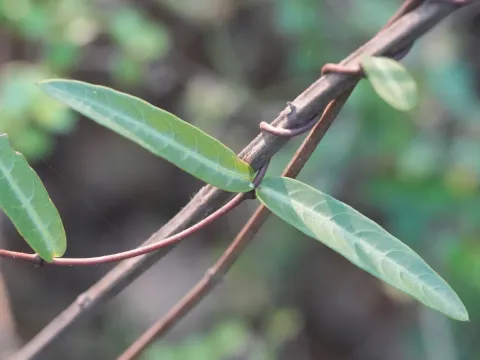
The plant features woody, knotty rootstocks and slender, wiry stems that exhibit a climbing habit. Its leaves are opposite and exhibit a range of shapes, often displaying whitish midribs. The small, purplish-green flowers emerge in axillary clusters during the flowering period.
Hemidesmus thrives in tropical climates characterized by warm temperatures and consistent light. It is well-adapted to varied environments, ranging from open scrublands to semi-shaded areas, provided that the light intensity remains sufficient for healthy photosynthesis.
Soil requirements focus on well-draining textures, such as sandy loams or porous soils with neutral to slightly acidic pH levels. Proper drainage is the most critical factor in successful cultivation, as the roots are highly susceptible to rot if water persists in the root zone.
Economic importance is centered on its root system, which is harvested for its phytochemical content. It is widely used in traditional medical systems for its aromatic, diuretic, and blood-purifying properties, and is often traded as a sustainable herbal resource in the industry.
Root rot caused by fungal pathogens is the most prevalent disease threatening Hemidesmus crops. This condition is usually triggered by poor drainage or excessive soil moisture, leading to the decay of the valuable rootstock and subsequent stunted growth.
Insect pests include aphids and leaf-eating beetles which can cause significant damage to the foliage, especially in young plants. Such infestations reduce the overall photosynthetic capacity and may impact the accumulation of bioactive compounds in the roots.
Effective management strategies include the implementation of careful irrigation schedules that prioritize moisture regulation rather than abundance. Cultural control methods, such as removing affected plant parts, are highly recommended to prevent the spread of fungal spores.
For pest control, farmers are advised to use organic or biological pesticides to maintain the medicinal quality of the harvested materials. Regular monitoring of the plantation is essential for the early detection and management of localized outbreaks.
Maintaining soil aeration through regular shallow tillage helps in preventing both pest colonization and soil-borne diseases. Ensuring a robust and healthy crop stand through appropriate spacing is the best defense against environmental and biological threats.