
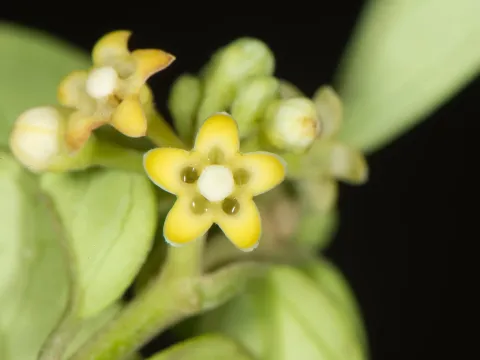
Gymnema sylvestre
Gymnema
The propagation of Gymnema sylvestre is primarily performed through seeds or stem cuttings in controlled greenhouse environments. Seeds are sown in a nutrient-rich substrate at temperatures not lower than 25°C, as the plant is sensitive to cold.
What the section contains

Gymnema sylvestre
In temperate zones, sowing must be conducted in specialized greenhouse complexes to ensure a consistent climate throughout the germination period.
Vegetative propagation uses semi-hardwood cuttings planted in light, well-drained soil fortified with vermiculite to encourage rooting.
The optimal time for sowing is spring, as the increasing daylight hours stimulate vigorous growth in the young vines.
Planting density is carefully managed to provide adequate airflow and light access, which are critical for the healthy development of this climbing vine.
Gymnema belongs to the Apocynaceae family and is a perennial woody vine native to the tropical forests of India, Africa, and Australia.
The crop requires high temperatures, typically ranging from 22°C to 30°C, and cannot tolerate frost, making open-field cultivation impossible outside tropical zones.
Fertile, loamy, or sandy soils with a neutral to slightly acidic pH are ideal, provided they offer excellent drainage to prevent waterlogging.
The plant thrives in bright but diffused light; direct, harsh sunlight can damage the leaves and stress the plant, necessitating the use of shading nets.
Consistent, moderate watering is essential, allowing the topsoil to dry slightly between sessions to maintain root health and prevent fungal infections.
The economic value of Gymnema sylvestre is found in its leaves, which are rich in gymnemic acids known for their unique biological effects on sugar metabolism.
Yield depends on light intensity, proper nutrition during the growing season, and the frequency of harvests possible within a single year.
Regular pruning of the vine encourages side shoots and increased leaf biomass, significantly boosting the total harvest per square meter.
Drying must be performed under strictly controlled temperatures (below 45°C) to prevent the degradation of heat-sensitive active components.
Post-harvest processing involves cleaning and sorting the leaves to ensure a high-quality product free from contaminants for the pharmaceutical industry.
In greenhouse settings, the plant is susceptible to common tropical pests, including spider mites and whiteflies, which thrive in warm, dry microclimates.
Root rot caused by pathogens such as Pythium and Phytophthora represents a major threat, particularly if drainage is inadequate or irrigation is excessive.
Powdery mildew can affect the foliage if ventilation is poor, requiring careful management of humidity levels within the greenhouse.
Integrated Pest Management (IPM) techniques, including the use of beneficial insects, are recommended for large-scale production to ensure clean medicinal material.
- Frequent monitoring for pest populations on the undersides of leaves.
- Maintaining proper spacing to ensure adequate air circulation.
- Using sterilized growing media to minimize soil-borne disease risks.
Harvesting commences when the plant reaches a phase of active growth and the foliage is fully developed for optimal chemical concentration.
Leaves are collected manually or with pruning shears, ensuring that the primary stems remain intact to support continued plant vitality.
Harvesting schedules are planned to allow the plants to regenerate adequately between cutting cycles throughout the growing season.
Immediate processing after harvest is vital to prevent leaf fermentation, which can rapidly diminish the medicinal value of the foliage.
Quality control standards verify the chemical profile of the harvested dry matter before it is marketed for herbal supplement production.