
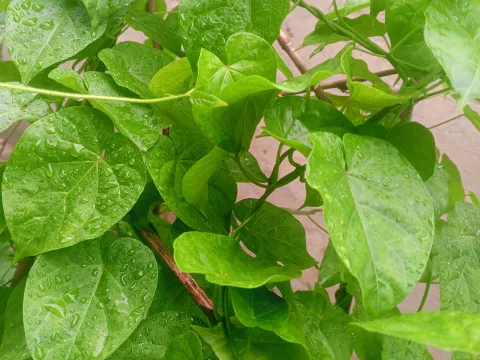
Gongronema
Gongronema
Gongronema (Gongronema latifolium) is a perennial climbing shrub belonging to the Apocynaceae family. It is widely cultivated in tropical regions for its edible leaves and medicinal properties. Propagation is typically achieved through seeds or stem cuttings, which are the most common methods for establishing a new plantation.
What the section contains

Gongronema
Sowing seeds is usually timed with the onset of the rainy season to provide the consistent moisture required for germination. For commercial setups, vegetative propagation via cuttings is preferred as it ensures uniformity and accelerates the establishment of the crop compared to growing from seeds.
The plant is a vigorous climber, necessitating the use of stakes or trellises to support its growth. Without vertical support, the plant tends to trail, which negatively impacts leaf quality and makes harvesting significantly more difficult and time-consuming for workers.
Integration into agroforestry systems is a common practice for Gongronema. By planting it under the canopy of larger trees, farmers provide the plant with necessary protection from direct tropical sunlight while optimizing land use efficiency in smallholder farm settings.
A distinctive biological feature of Gongronema is the presence of milky latex within its tissues. Proper management of these vines, including regular pruning, is essential as it not only promotes bushier growth and higher yields but also encourages the continuous production of fresh, harvestable shoots.
Gongronema thrives in tropical climates where temperatures remain consistently between 22°C and 30°C. It is highly sensitive to frost and cold stress, which restricts its cultivation primarily to equatorial and tropical zones with stable, warm weather conditions throughout the year.
The crop prefers well-drained, fertile loamy soils rich in organic matter. While the plant requires sufficient soil moisture for optimal growth, waterlogging must be avoided at all costs, as stagnant water is a primary cause of root rot in this species.
Light management is crucial; the plant prefers partial shade. Intense, direct midday sunlight can scorch the leaves, reducing their market value. Mulching the soil surface is an effective technique to maintain soil moisture, regulate root temperature, and suppress weed competition.
Regular irrigation is vital during dry periods to prevent the plants from shedding leaves or entering a dormant phase. Farmers should aim for a balance, ensuring the soil remains moist without creating conditions that facilitate the growth of pathogens in the root zone.
Nutrition management should prioritize organic amendments like well-decomposed compost. While balanced NPK fertilizers can be used during active growth phases, excessive nitrogen application should be avoided, as it may adversely affect the delicate flavor profile of the leaves.
Yield productivity is heavily dependent on the management system employed, particularly the frequency of pruning and harvesting. In well-maintained plantations, Gongronema is highly productive, providing a continuous supply of green foliage throughout the year.
During the first year, yields are generally lower as the plant invests energy into establishing its root and stem system. However, from the second year onwards, the plant matures and becomes capable of sustaining frequent harvests of succulent young shoots and leaves.
Regular pruning is the key to high yields. By systematically harvesting the mature branches, farmers stimulate the growth of new, tender side shoots. This practice ensures that the crop maintains high density, maximizing the volume of harvestable material from each plant.
The economic lifespan of a Gongronema plantation is typically between 4 to 5 years. After this period, productivity usually declines due to the aging of the vine stock. A planned replanting schedule is recommended to maintain profitability and crop health.
Adopting irrigation technology, such as drip lines, has proven to be an effective method for enhancing leaf quality and yield consistency. Such interventions help the plant withstand minor dry spells and maintain a steady growth rate, ensuring a stable market supply.
Gongronema is susceptible to various fungal pathogens, especially when grown in high-humidity environments. Leaf spot and powdery mildew are the most common diseases that can damage the foliage and reduce the crop's marketability if left unmanaged.
Insect pests, particularly aphids and spider mites, are frequent issues in Gongronema farming. These pests feed on the tender young leaves, causing leaf curling and reduced vigor. Continuous monitoring is required to detect early infestations before they cause significant damage.
Root-knot nematodes represent a hidden, severe threat to plantation longevity. Since the plant is often kept in the same field for several years, nematode buildup in the soil can be devastating. Proper soil preparation and crop rotation practices are essential for prevention.
Integrated Pest Management (IPM) is the most sustainable approach for Gongronema protection. Since the leaves are directly consumed by humans, the use of harsh synthetic pesticides should be avoided in favor of biological controls and safe botanical sprays.
Maintaining good field hygiene, such as removing debris and infected plant parts, is the first line of defense against both pests and diseases. By keeping the plantation clean and well-aerated, farmers can significantly reduce the pressure from common tropical plant threats.
Harvesting Gongronema is a meticulous, labor-intensive process performed by hand. Workers use sharp shears to snip off the tender stems and leaves, taking care to leave the primary structure of the vine intact to allow for continued regeneration of the plant.
Harvesting is best conducted in the early morning hours when the leaf tissues have optimal turgor pressure, ensuring a fresh and crisp product. Selective harvesting techniques allow for ongoing production, as only the most mature and high-quality leaves are picked at any time.
Once harvested, the produce is highly perishable and requires immediate handling. It should be kept cool and transported in breathable containers to prevent overheating and moisture buildup, which can lead to rapid deterioration and the growth of mold.
In many regions, surplus harvests are dried in the shade to preserve the leaves for future use. The drying process must be carefully controlled in a well-ventilated area to maintain the leaves' nutritional value and distinct aromatic properties for as long as possible.
Post-harvest quality control involves sorting and cleaning the leaves to remove any damaged, yellowed, or diseased tissues. This step is critical for meeting quality standards and achieving a better price point in the market, reflecting the quality of the agricultural product.