
Gymnema sylvestre
Gymnema sylvestre
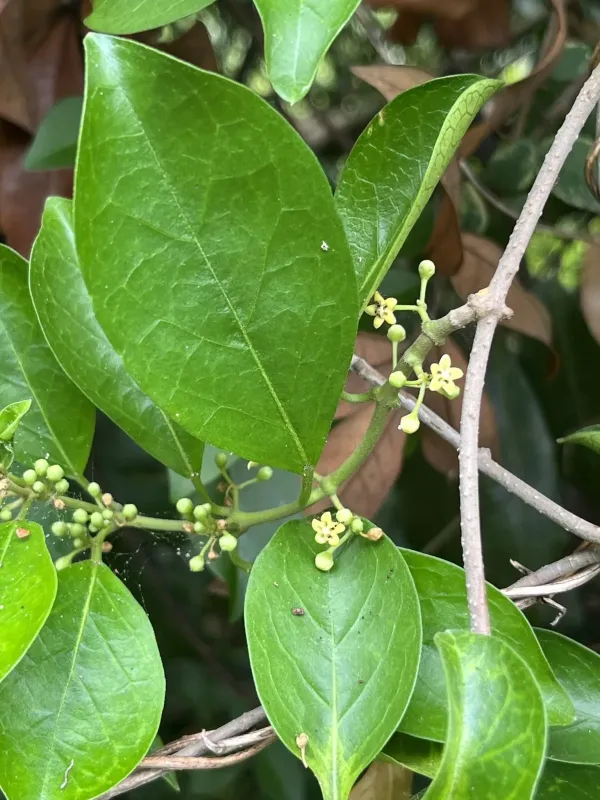
Description
Sowing dates
Gymnema sylvestre is a perennial woody vine that is typically propagated by seeds sown at the beginning of the spring season in tropical and subtropical regions.
For successful germination, seeds should be pre-treated by soaking in lukewarm water to soften the outer coat, which improves the overall success rate.
Seeds are placed in a sterile, well-draining potting medium at a depth of about 1 cm, requiring constant warmth between 25 and 30 degrees Celsius to sprout.
Once seedlings have developed at least two pairs of true leaves, they should be carefully transplanted into larger individual pots to establish a strong root system.
Direct sowing in fields is rarely practiced due to the slow initial growth of the plant, making nursery propagation the preferred method for commercial plantations.
Growing requirements
Belonging to the Apocynaceae family, this vine thrives in nutrient-rich, loamy soils that possess excellent drainage properties to prevent root suffocation.
The plant requires full to partial sunlight, though young vines benefit from shading during the hottest hours of the day to prevent leaf scorching.
Gymnema sylvestre is highly sensitive to frost; it flourishes in temperatures ranging from 22 to 35 degrees Celsius and requires high humidity levels for optimal growth.
As a vigorous climbing plant, it is essential to provide sturdy trellises or supports, as the vines naturally seek vertical surfaces to expand their foliage.
Regular irrigation is vital during the growing season; however, the soil must be allowed to dry slightly between waterings to maintain a healthy root zone.
Yield
The economic value of Gymnema sylvestre lies in its foliage, which is harvested for its high content of gymnemic acids used in health supplement production.
Yields are optimized by ensuring a balanced supply of macro and micronutrients, specifically focusing on nitrogen during the early growth phase and potassium during leaf maturation.
In well-managed tropical plantations, multiple harvests can be achieved annually, significantly increasing the total output of medicinal-grade biomass.
The total yield per plant increases annually as the vine becomes more established and develops a denser network of stems and leaves.
Quality control is crucial, as the concentration of active compounds varies based on soil nutrition, water availability, and the specific age of the leaves at harvest.
Main diseases and pests
The most common pests affecting Gymnema sylvestre include aphids, spider mites, and whiteflies, which thrive in stagnant air and warm greenhouse conditions.
Fungal diseases, particularly root rot, pose a significant threat if drainage is inadequate or if the irrigation schedule is too aggressive in cool weather.
Powdery mildew can occur if there is insufficient air circulation, necessitating strategic spacing of plants to ensure good airflow throughout the canopy.
Root-knot nematodes can also be a problematic issue, emphasizing the importance of planting in soil that has been tested and cleared of such pathogens.
- Regular monitoring of the underside of leaves for pests.
- Pruning of damaged or diseased sections.
- Implementation of integrated pest management strategies.
- Disinfection of tools to prevent cross-contamination.
Harvesting
Harvesting usually begins when the plants are mature enough, typically starting after the first growing season when the foliage is dense and healthy.
Leaves are collected by hand or with sanitized cutting tools, taking care to leave enough vegetative growth to allow the vine to recover quickly.
Immediately after harvest, the leaves should be spread out in a shaded, well-ventilated area to undergo a steady, low-temperature drying process.
Exposing the harvested leaves to direct sunlight must be avoided, as UV radiation can degrade the active medicinal components, reducing the quality of the final product.
Once the leaves are completely dry and brittle, they are packed in moisture-proof containers and stored in a cool, dark environment to preserve their therapeutic integrity.