
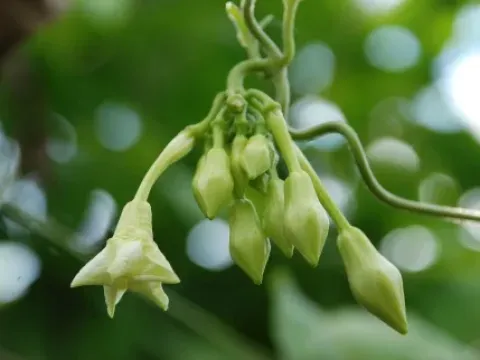
Fernaldia
Fernaldia
Fernaldia, scientifically known as Fernaldia pandurata and commonly called loroco, is a perennial vine belonging to the Apocynaceae family. Native to Central America, it is highly valued for its edible flowers, which are widely consumed in regional cuisine.
What the section contains

Fernaldia
The plant thrives in tropical and subtropical climates, requiring consistent warmth throughout the year. It does not tolerate frost, making greenhouse cultivation essential in non-tropical regions to ensure survival and consistent flower production.
Cultivation requires well-draining, nutrient-rich soil with a neutral pH level. As a climbing vine, it is critical to provide robust trellises or netting to support its vigorous vertical growth and maximize airflow through the foliage.
Water management is a key aspect of its agro-technology. While the plant requires regular irrigation to keep the soil moist, it is sensitive to waterlogging, which can easily trigger root rot and stunt the plant's growth.
Harvesting usually involves picking the flower buds before they fully bloom, as the unopened buds are considered the most flavorful part of the plant. Proper pruning is necessary to maintain the shape of the vine and encourage new bud development.
Fernaldia is commonly susceptible to sap-sucking pests such as aphids and spider mites, which can cause significant damage to the delicate flower buds and reduce harvest quality.
Fungal pathogens, including powdery mildew, can proliferate in high-humidity environments with poor air circulation, necessitating regular canopy thinning and sanitation.
Root-knot nematodes are a recognized soil-borne threat that can significantly impact the plant's nutrient uptake, requiring careful soil management and rotation if possible.
To control pests effectively, integrated pest management (IPM) is recommended, prioritizing the use of horticultural oils and biological agents over synthetic pesticides.
Regular monitoring of the underside of the leaves and the developing buds allows for early intervention, preventing the widespread damage that occurs once infestations become established.