
Duvalia
Duvalia
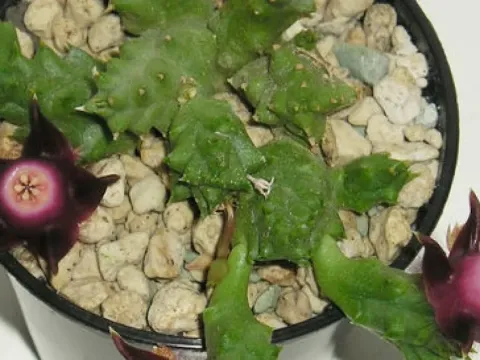
Duvalia is a genus of succulent plants belonging to the Apocynaceae family. These plants are known for their compact, low-growing habit and specialized fleshy stems designed to store moisture in arid environments, making them highly adapted to desert conditions.
What the section contains

Duvalia
Originating from Southern and Eastern Africa, these succulents naturally thrive in rocky habitats and well-drained, sandy soils. Their botanical structure involves distinct, often four-angled stems that spread horizontally rather than growing vertically, forming dense mats over time.
To successfully cultivate Duvalia, one must provide bright, indirect light throughout the year. Direct exposure to the harsh midday sun should be avoided in greenhouse settings to prevent skin scorching, while insufficient light levels can lead to etiolation and structural weakness.
The soil requirements are strict: the medium must be highly porous and inorganic. A mixture containing coarse sand, pumice, or perlite is essential to ensure rapid drainage, as any water retention around the root zone is detrimental to the plant's long-term health.
Climate management requires maintaining a warm growing season with temperatures between 22 and 28 degrees Celsius. During the winter dormancy period, temperatures should be lowered to encourage rest, and watering should be almost completely suspended to simulate natural drought.
The most significant threat to Duvalia is the over-accumulation of water, which invariably leads to stem and root rot. In horticultural practice, root rot is the most common cause of failure, often exacerbated by the use of overly dense or peat-rich potting substrates.
Pest pressures primarily include mealybugs, which thrive in the protected crevices of the fleshy stems, and spider mites, particularly in dry and poorly ventilated environments. Early detection through regular inspections is vital to keeping the collection healthy.
Management of these pests should involve the use of appropriate systemic insecticides. It is critical to apply these treatments during the early hours or late afternoon to avoid stress to the plant tissue and to prevent phytotoxicity caused by chemical reactions with sunlight.
Disease prevention relies heavily on proper environmental control. Ensuring good air circulation and strictly avoiding moisture on the plant body during low-temperature periods are the best strategies for keeping the plants free from fungal and bacterial pathogens.
In cases of severe infestation or rot, cutting off healthy stems for propagation is often the most effective recovery method. By replanting healthy segments in dry, sterile media, one can successfully replace the lost specimen and maintain the culture.