
Echites
Echites
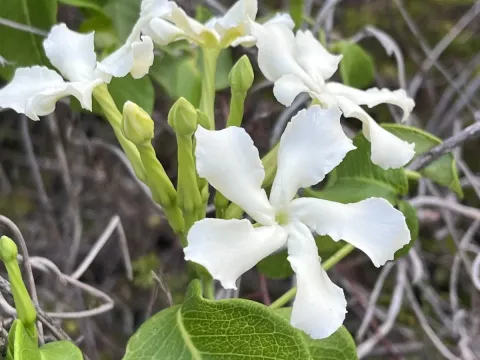
Echites is a genus of evergreen climbing plants belonging to the Apocynaceae family. These plants are native to the tropical regions of Central and South America and the Caribbean, where they thrive in humid, warm environments as woody vines.
What the section contains

Echites
To cultivate Echites successfully, high ambient temperatures are essential. The plant does not tolerate frost and prefers a stable temperature range between 20°C and 28°C. Cold drafts or sudden temperature fluctuations can lead to leaf drop and stunted growth.
Light requirements for Echites are quite specific: they need bright, indirect sunlight to maintain their physiological health. Intense, direct sun can scorch the foliage, while insufficient light prevents the plant from flowering and causes elongated, weak stems.
The growing medium must be well-drained and nutrient-rich, mimicking the organic-heavy soils of tropical forests. A mix of peat, perlite, and coarse sand provides the necessary aeration and moisture retention that the roots of the Echites require.
Watering should be consistent throughout the active growing season. The soil surface should be allowed to dry slightly between waterings, but the root ball must never dry out completely. Humidity levels should be kept high, ideally above 60%, to mimic their natural habitat.
Spider mites are the most frequent pests affecting Echites, particularly in indoor settings with low humidity. Infestations are characterized by fine webbing and yellowing leaves; regular misting and miticide application are recommended treatments.
Mealybugs can also infest the stems and leaf axils, sucking the plant's sap and weakening its overall structure. These pests should be managed through physical removal or the use of systemic insecticides designed for ornamental plants.
Root rot, caused by Phytophthora or Pythium species, occurs when soil drainage is poor. The primary symptom is the wilting of stems despite the soil being moist, which often necessitates repotting and trimming of the affected root system.
Fungal leaf spots are common when air circulation is inadequate in a greenhouse or indoor space. Maintaining adequate spacing between plants and ensuring constant airflow are effective preventative measures against such diseases.
Nutritional deficiencies, such as yellowing of the leaves due to magnesium or iron shortage, can stress the plant and make it more susceptible to opportunistic pathogens. A balanced fertilizer regime is crucial for long-term plant health.