
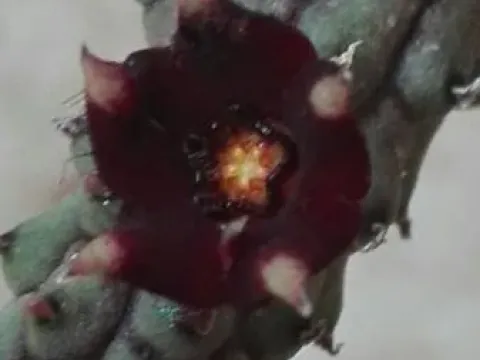
Echidnopsis
Echidnopsis
Echidnopsis is a genus of succulent plants belonging to the Apocynaceae family. These unique plants are native to arid regions of East Africa and the Arabian Peninsula, where they have adapted to thrive in harsh, rocky, and desert-like environments.
What the section contains

Echidnopsis
Cultivating this plant requires replicating its natural habitat, which is characterized by intense sunlight and very low rainfall. In an indoor setting, Echidnopsis should be placed in the brightest spot available, ideally in a south-facing window, while ensuring it is protected from scorching midday heat.
The soil must be highly porous and inorganic. A standard mixture for Echidnopsis includes coarse sand, perlite, and a very small amount of organic substrate. Proper drainage is non-negotiable, as the plant is highly susceptible to root damage from lingering moisture.
Watering practices are essential for the health of the plant. During the active growing season, wait until the substrate is completely dry before providing a moderate amount of water. In winter, the plant goes dormant and requires very little water to survive.
Thermal management is equally important. Keep the plants in a warm environment during summer, ideally between 20°C and 30°C, and provide a cooler rest period during winter, with temperatures dropping to around 12°C to prevent excessive stretching.
The most significant threat to Echidnopsis is root rot caused by overwatering or poor drainage. Once root rot takes hold, it can spread rapidly to the succulent stems, causing them to collapse and turn black within a very short timeframe.
Mealybugs are the most common pests found on these succulents. They tend to cluster in the grooves and crevices of the stems, where they extract plant sap and weaken the overall structure, often leaving behind a white, cotton-like residue.
Spider mites can also be problematic, especially in environments with low humidity. They cause stippling and discolouration of the stem surface, which can lead to permanent scarring if left untreated for long periods.
To combat these issues, maintain good hygiene in the plant area and ensure adequate airflow. If an infestation occurs, application of an appropriate horticultural oil or insecticide, as well as manual removal with a soft brush, is recommended.
Preventative care is far more effective than curative treatment. By ensuring that the plant is not kept in a cool and damp environment simultaneously, most fungal and bacterial infections can be avoided entirely throughout the plant's life cycle.