
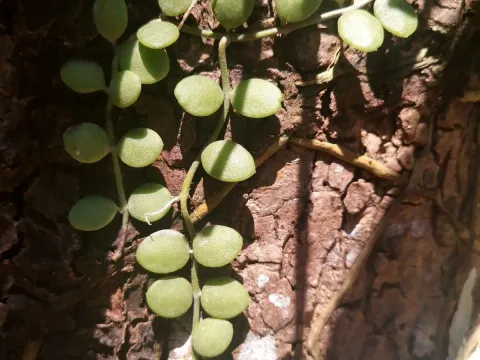
Dischidia
Dischidia R. Br.
Dischidia is a fascinating genus of epiphytic plants belonging to the Apocynaceae family. Native to tropical regions of Asia and Australia, these plants have evolved to inhabit tree canopies, often developing symbiotic relationships with ants that live within their specialized, bladder-like leaves.
What the section contains


Dischidia
In a controlled growing environment, Dischidia requires bright, indirect light to thrive. While they can tolerate some morning sun, intense midday light should be avoided to prevent scorching the foliage, which is particularly sensitive in thin-leaved varieties.
The climate requirements include a steady temperature range between 20°C and 28°C. As tropical plants, they are highly sensitive to cold drafts and should be placed away from air conditioning vents or drafty windows during the winter months.
The growing medium must be highly porous to ensure excellent drainage. A mix specifically formulated for epiphytic plants, consisting of orchid bark, perlite, chopped sphagnum moss, and charcoal, provides the ideal environment for the root system.
Watering should be approached with care, allowing the substrate to dry slightly between waterings. Maintaining high ambient humidity is essential for the health of the plant; daily misting or using a pebble tray with water helps replicate their natural habitat.
The most common disease affecting Dischidia is root rot, caused by excessive moisture and poor drainage. Once the roots are compromised, the plant struggles to transport water, leading to rapid yellowing and wilting of the stems.
Mealybugs are the primary pest threat to these plants. They tend to congregate in the tight axils of the leaves, making them difficult to detect. Regular inspection of the plant's structure is crucial for early intervention.
Spider mites can also be a significant issue, particularly in drier environments. These pests cause fine webbing and discoloration of the foliage, which can quickly diminish the plant's ornamental value if left untreated.
Fungal leaf spots can occur if there is inadequate air circulation around the foliage. Ensuring a gentle breeze or light ventilation can prevent these pathogens from establishing themselves on the leaves.
Effective pest management involves using systemic insecticides or insecticidal soaps carefully. It is always recommended to test any treatment on a small portion of the plant before applying it to the entire specimen to avoid foliage burn.