
Dischidia pectenoides
Dischidia pectenoides H. Pearson
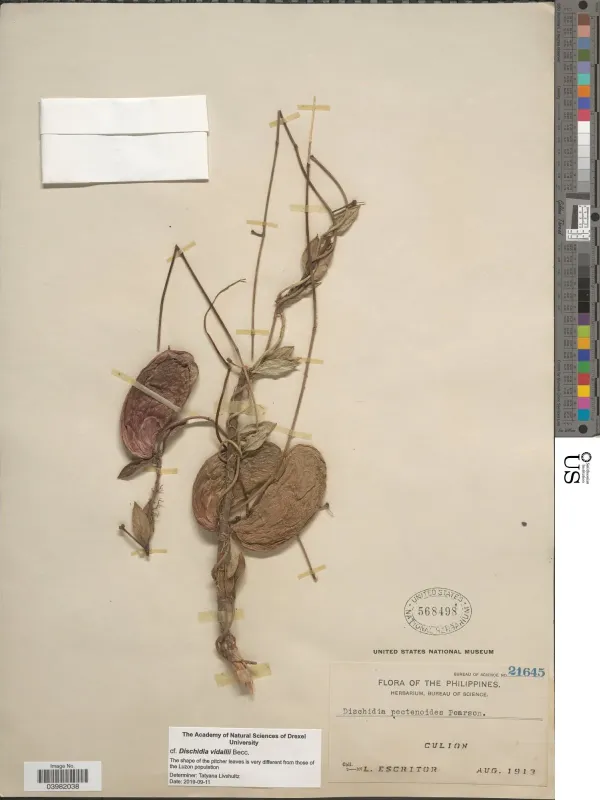
Description
Growing requirements
Dischidia pectenoides is a fascinating epiphytic succulent belonging to the Apocynaceae family. Originating from the tropical regions of the Philippines, it is well-known for its unique adaptation to life in tree canopies, often acting as a host for ant colonies.
The plant features specialized, balloon-shaped leaves that act as modified pitchers. These structures provide a habitat for ants, which in turn provide the plant with nutrients, a phenomenon known as myrmecophily, which is essential for its survival in nutrient-poor environments.
In terms of light requirements, Dischidia pectenoides thrives in bright, indirect light. Exposure to direct afternoon sun should be strictly avoided as it can scorch the delicate foliage and damage the pitchers, negatively affecting the plant's overall aesthetic and health.
The growth medium must be highly porous and well-draining, similar to those used for epiphytic orchids. A mix consisting of orchid bark, sphagnum moss, and charcoal is ideal for preventing water retention around the roots, which is critical for this species.
Regarding climate, the plant requires a warm, humid environment with high ambient humidity levels. Regular misting or the use of a humidifier is highly recommended, especially during drier seasons or in heated indoor environments, to maintain its physiological balance.
Main diseases and pests
The primary threat to the health of Dischidia pectenoides is waterlogging. Overwatering can rapidly lead to root rot, which is often fatal, as the plant's root system requires significant oxygen circulation to remain healthy and active.
Pest infestations are another common issue, with mealybugs and spider mites being the most problematic. These pests thrive in dry indoor conditions and can quickly weaken the plant by feeding on its cell sap, leading to stunted growth.
Fungal pathogens can also pose a risk if the air circulation is inadequate. Dark, soft patches on the stems or leaves often indicate bacterial or fungal decay, which necessitates immediate isolation and treatment with appropriate fungicides.
Cold drafts are extremely detrimental to this tropical species. Exposure to temperatures below 15 degrees Celsius can cause severe physiological stress, leading to leaf drop and susceptibility to opportunistic pathogens.
Effective management of these threats involves proactive care, including regular inspection for signs of pests or decay. Ensuring a balance between humidity and ventilation is the best strategy for maintaining a thriving and healthy plant specimen.