
Dischidia ruscifolia
Dischidia ruscifolia Warb ex K.Schum. & Lauterb.
Description
Growing requirements
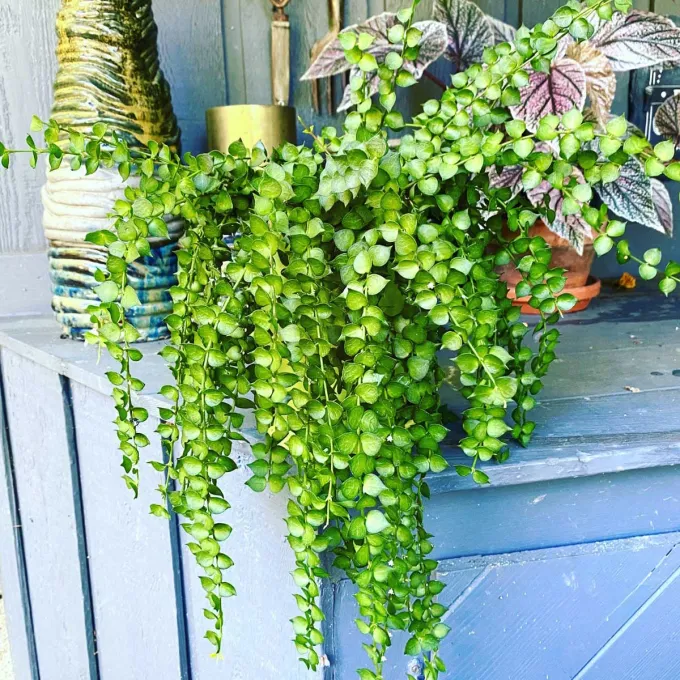
Dischidia ruscifolia, commonly known as Million Hearts, is a member of the Apocynaceae family native to the tropical rainforests of the Philippines. This epiphytic vine is highly valued in horticulture for its cascading stems and small, heart-shaped leaves.
Optimal growth requires bright, filtered light. Direct sunlight is detrimental to the plant, often causing leaf scorching and dehydration, while insufficient light leads to stunted growth and loss of the plant's characteristic dense foliage.
The substrate must be highly porous, mimicking the natural bark environment where the plant grows in the wild. A mixture consisting of orchid bark, perlite, and long-fiber sphagnum moss is recommended to ensure excellent aeration and drainage for the delicate roots.
Temperature management is critical for this crop; it thrives in a warm environment with temperatures consistently between +20 and +26 degrees Celsius. Exposure to cold drafts or temperatures dropping below +15 degrees can cause significant stress or dormancy.
Watering should be balanced to maintain moderate moisture levels. It is essential to let the surface of the medium dry out slightly before the next irrigation to prevent the accumulation of moisture around the root crown, which promotes rot.
Main diseases and pests
The most frequent pests affecting Dischidia ruscifolia include mealybugs and spider mites. These pests thrive in dry indoor conditions and can quickly colonize the joints between leaves and stems, sucking the plant's vital sap.
Root rot remains the most serious threat, usually resulting from poor drainage or excessive watering. Once root tissue begins to decay, the plant struggles to transport water, leading to shriveling leaves that may fall off entirely.
Fungal infections can develop if the environment lacks proper air circulation. Stagnant air allows spores to settle on the foliage, especially if the leaves remain wet for extended periods after cleaning or high-humidity events.
Monitoring the plant for yellowing leaves or white, cotton-like residue is crucial for early intervention. If pests are detected, the use of mild insecticidal soaps or neem oil is usually sufficient to control the infestation without harming the plant.
Maintaining cleanliness in the growing area and using high-quality, mineral-poor water will significantly improve the plant's overall health and resistance to both biological pests and secondary fungal outbreaks.