
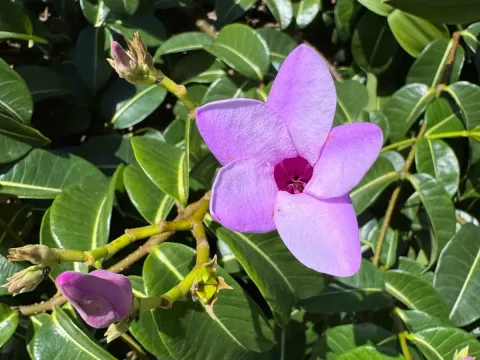
Cryptostegia
Cryptostegia
Cryptostegia is primarily propagated through vegetative methods such as stem cuttings, which ensure the offspring maintain the characteristics of the parent plant. Seeds can also be used, although they require careful handling and specific germination conditions.
What the section contains

Cryptostegia
For seed propagation, use a well-draining, nutrient-rich substrate in a controlled nursery environment. Maintain temperatures between 25°C and 30°C to ensure rapid and uniform emergence of the seedlings within the first few weeks.
Transplanting into the open field should only occur once the threat of cold weather has passed. In tropical regions, the onset of the rainy season is the ideal window for planting, as the natural moisture aids in rapid root establishment.
The planting density depends on the final utilization goals, with closer spacing recommended for biomass production and wider spacing for decorative or hedge planting. Ensure that the root ball is carefully handled to prevent transplant shock.
Proper spacing and alignment in rows are essential for future maintenance and harvesting operations. After planting, applying a thin layer of organic mulch helps retain soil moisture and prevents competitive weed growth during the early stages.
As a member of the Apocynaceae family, Cryptostegia is a vigorous, climbing shrub that thrives in warm, tropical climates. It is highly sensitive to frost and low temperatures, which limits its commercial cultivation to frost-free zones.
The crop prefers fertile, sandy loam soils that offer excellent drainage. While it is somewhat drought-tolerant once established, providing consistent irrigation during the peak growth season significantly improves latex yield and biomass production.
High levels of solar radiation are required for optimal development. Shading, whether from tree canopies or overcrowding, leads to thin, weak stems and significantly reduced rubber content in the plant's laticifers.
Regular fertilization with balanced NPK formulas is necessary to support the plant's rapid growth cycle. Micronutrient applications can be beneficial in areas where the soil has been depleted by long-term continuous cultivation.
The plants are generally hardy but require protection from high-velocity winds that can damage the long, vine-like branches. In large-scale plantations, the use of windbreaks is an important strategic investment.
The economic value of Cryptostegia is primarily based on the natural rubber (latex) harvested from its stems. Yields become commercially viable as the plants reach maturity, typically around the third or fourth year of growth.
Harvesting is performed by carefully incising the stems to allow the latex to flow, similar to techniques used in Hevea rubber production. The frequency of tapping must be balanced with the plant's health to ensure long-term productivity.
Beyond rubber production, the stems and leaves can be processed for cellulose, making the plant a potential source for paper and textile fibers. This dual-use potential enhances the overall return on investment for growers.
Annual yields vary depending on soil fertility, climate, and the intensity of care. Modern cultivation systems that incorporate automated drip irrigation and precision nutrient management consistently yield higher volumes of raw materials.
Ongoing research into hybrid varieties aims to improve both the concentration of natural polymers in the latex and the overall vigor of the plants. These improvements are crucial for making Cryptostegia a competitive industrial crop.
Aphids and whiteflies are the most common insect pests, feeding on the tender apical growth and reducing the plant's energy reserves. Severe infestations can lead to stunted growth and reduced latex flow.
Fungal diseases, particularly root rots triggered by waterlogged soil, pose a significant risk. Maintaining proper soil drainage and avoiding over-irrigation are the most effective preventative measures against these pathogens.
Weed management is critical, particularly for young plantations. Invasive grasses and broad-leaved weeds compete for nutrients and moisture, often slowing the initial establishment phase of the Cryptostegia crop.
Viral infections, often spread by insect vectors, can cause leaf chlorosis and mosaic patterns, which diminish the plant's photosynthetic capacity. Strict quarantine of new nursery stock is essential for disease prevention.
Integrated Pest Management (IPM) practices, such as encouraging natural predators and using selective bio-pesticides, are highly recommended to keep the plantation healthy without contaminating the sensitive latex supply.
The harvesting process requires precise timing, with early morning hours being the most productive. At this time, the internal turgor pressure within the plant is at its highest, facilitating a better flow of latex upon incision.
Manual labor is often required for the delicate task of tapping to avoid deep scarring or permanent damage to the plant's vascular tissues. Well-trained crews can significantly increase the quality and quantity of the harvest.
Immediate stabilization of the harvested latex is necessary to prevent premature coagulation and degradation. Using specialized stabilizers and filtration equipment at the site of harvest ensures the final product meets industrial standards.
When harvesting for biomass rather than latex, mechanical harvesters can be employed to quickly process large swathes of the plantation. This is an efficient method for supplying raw fiber for industrial manufacturing.
Post-harvest waste management involves collecting and composting the remains to prevent the buildup of pathogens on the field. Maintaining a clean and debris-free environment is essential for the health of the next production cycle.