
Button Orchid
Dischidia nummularia R. Br.
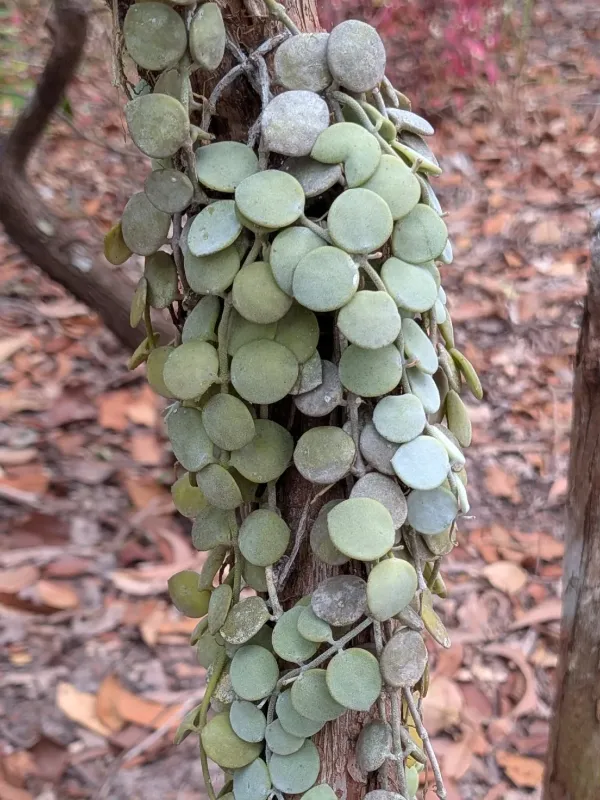
Description
Growing requirements
The Button Orchid (Dischidia nummularia) is a fascinating epiphytic species belonging to the Apocynaceae family. It is native to tropical regions of Asia and Australia, where it naturally inhabits tree trunks and branches in the forest canopy.
Botanically, this plant is well-adapted to its environment. It features small, coin-shaped leaves that are succulent in nature, allowing the plant to store moisture during periods of low rainfall in its natural tropical habitat.
Successful cultivation of Dischidia nummularia requires bright, indirect light. Avoid exposing the plant to harsh direct sun, which can scorch the delicate foliage and cause the plant to lose its vibrant green color.
The potting medium must be highly porous to mimic the epiphytic lifestyle. A mixture of orchid bark, perlite, and long-fiber sphagnum moss is ideal to ensure sufficient drainage and aeration for the root system.
Temperature should ideally range between 20°C and 25°C. As a tropical plant, it thrives in high humidity, which can be achieved through regular misting or by placing the plant in a terrarium setup.
Main diseases and pests
Mealybugs are the most common pests found on this species. They often hide in the small spaces between leaves and stems, making them difficult to detect until an infestation is well-established.
Spider mites can also be a significant issue, particularly when the ambient air becomes too dry. These pests thrive in stagnant air conditions, often causing stippling on the leaves.
Root rot, resulting from overwatering or poorly draining soil, is the most common fatal condition for this plant. It is essential to ensure the roots are not left in stagnant water.
Regular maintenance, including wiping the leaves with a damp cloth and inspecting them for signs of pests, is the best preventative measure for maintaining a healthy plant.
If chemical intervention is necessary, use systemic insecticides or neem oil, ensuring that the application does not damage the sensitive succulent leaf structure.