
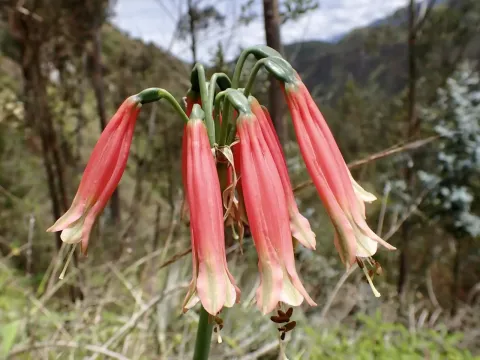
Phaedranassa
Phaedranassa
Phaedranassa is a genus of bulbous plants belonging to the Amaryllidaceae family, native to the mountainous Andean regions of South America. These plants are prized for their unique tubular flowers and attractive foliage.
What the section contains
 Phaedranassa carmiolii
Phaedranassa cinerea
Phaedranassa cinerea
Phaedranassa carmiolii
Phaedranassa carmiolii
Phaedranassa cinerea
Phaedranassa cinerea
 Phaedranassa dubia
Phaedranassa lehmannii
Phaedranassa lehmannii
Phaedranassa dubia
Phaedranassa dubia
Phaedranassa lehmannii
Phaedranassa lehmannii
 Phaedranassa schizantha
Phaedranassa schizantha
Phaedranassa schizantha
 Phaedranassa tunguraguae
Phaedranassa tunguraguae
Phaedranassa tunguraguae
 Phaedranassa viridiflora
Phaedranassa viridiflora
Phaedranassa viridiflora
Phaedranassa
For successful cultivation, the plant requires a well-draining, nutrient-rich soil substrate. A mix containing peat, perlite, and organic matter is typically recommended to prevent waterlogging around the bulb.
The ideal environment for Phaedranassa is one with bright, indirect light. Direct exposure to intense sunlight can cause leaf scorching, so a shaded spot near a bright window or in an greenhouse is preferred.
Consistent moisture is required during the active growing phase. However, as the plant enters dormancy, the irrigation frequency must be significantly reduced to allow the bulb to rest in a cool, dry state.
Temperature management is critical for this species. It thrives in moderate temperatures ranging from 18°C to 25°C. Protection from frost is essential, as the species is not winter-hardy and requires indoor housing during cold seasons.
Root rot is the most common issue affecting Phaedranassa, usually caused by overwatering or poor drainage systems in the containers. Preventive measures include ensuring the pot has sufficient holes.
Pests such as spider mites and mealybugs frequently target this plant, especially when kept in dry indoor environments. These pests can rapidly weaken the plant by extracting sap from the leaves.
Scale insects can also infest the stems, requiring manual removal or systemic pesticide treatment. Early detection is key to preventing large-scale infestations across a plant collection.
Fungal leaf spots can occur if the foliage remains wet for extended periods. Maintaining good air circulation around the plants helps to mitigate the risk of pathogen development.
Regular sanitation of the growing area and careful inspection of new plant introductions are standard practices to keep the cultivation healthy and productive.