
Phaedranassa viridiflora
Phaedranassa viridiflora
Description
Growing requirements
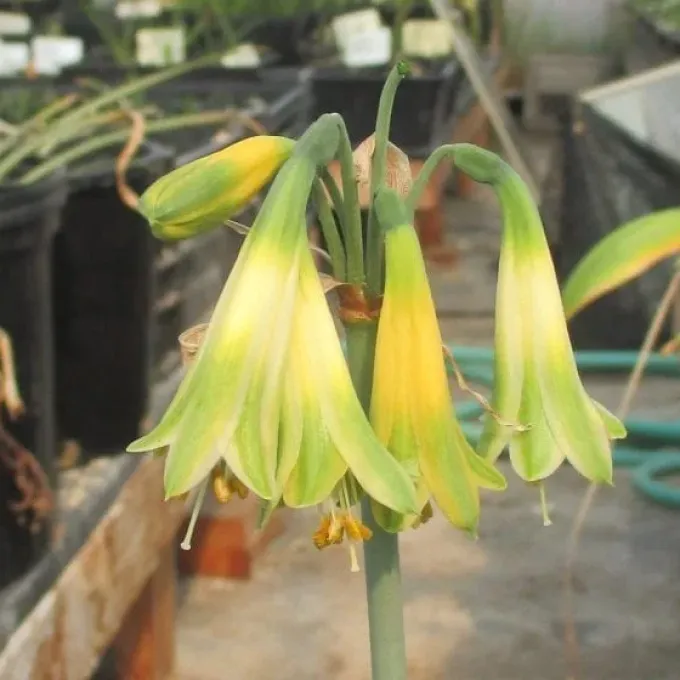
Phaedranassa viridiflora is an elegant bulbous plant belonging to the Amaryllidaceae family. Originating from the mountainous regions of Ecuador, it thrives in cloud forest habitats characterized by high humidity and moderate temperatures.
Cultivation requires a well-draining soil mix that remains moist but never waterlogged. A blend consisting of peat-based potting soil, perlite, and coarse bark is ideal for providing the necessary aeration to the root system.
The plant prefers bright, indirect sunlight to develop its unique, greenish tubular flowers. Placing it in a position where it can receive filtered light is crucial, as direct, harsh sun can easily damage the delicate foliage.
Regarding temperature, it is essential to keep the plant away from freezing conditions. It functions best as an indoor or conservatory specimen, maintaining an average room temperature, and avoiding extreme drafts or heat sources.
Watering management is a critical aspect of the lifecycle. During the growing season, consistent moisture is required to support the foliage and flower spikes, while a distinct dry rest period is necessary once the leaves begin to fade.
Main diseases and pests
Root rot caused by overwatering is the primary threat to this species. Excess moisture prevents root respiration and leads to the decay of the bulb, which is often difficult to treat once the process has begun.
Common indoor pests, specifically spider mites and mealybugs, are known to attack Phaedranassa viridiflora. These pests usually colonize the leaf bases and undersides, weakening the plant's overall vigor.
Control of these pests can be achieved through regular inspections and the application of horticultural oils or systemic insecticides. Maintaining proper air circulation around the plants helps prevent pest outbreaks.
Fungal diseases like Botrytis can occasionally manifest on the petals or leaves if ventilation is poor. Ensuring that the foliage is dry before nighttime and maintaining low humidity during the rest phase helps mitigate this risk.
Finally, always sanitize any cutting tools used during maintenance to prevent the transfer of pathogens from one bulb to another. Proper hygiene is the cornerstone of keeping this rare species healthy in a domestic collection.