
Paperwhite narcissus
Narcissus papyraceus
Description
Growing requirements
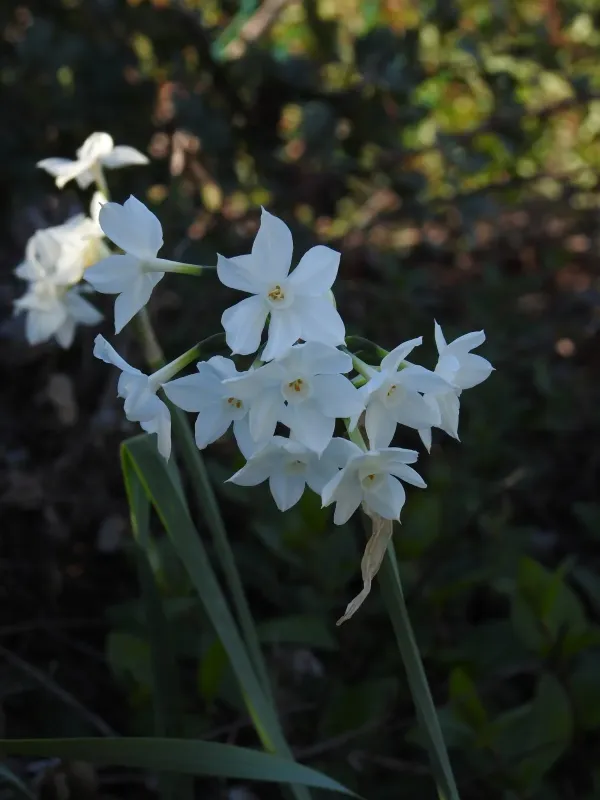
Paperwhite narcissus (Narcissus papyraceus) is a tender perennial bulb belonging to the Amaryllidaceae family. Native to the Mediterranean region, this species is uniquely adapted to thrive without a period of cold dormancy, which distinguishes it from many other Narcissus varieties popular in commercial horticulture.
The crop requires well-drained, porous media for optimal root development. When grown in containers, it is essential to prevent waterlogging, as the bulbs are highly susceptible to basal rot if left in standing water. It is a common practice to grow these bulbs in shallow bowls with pebbles and water, provided the water level touches only the root base.
Lighting is a critical factor for successful production. Bright, indirect light is necessary to ensure the plants develop strong stems that can support the heavy clusters of white, fragrant flowers. If the light intensity is too low, the plants often become etiolated and require support to remain upright.
Temperature management plays a vital role in the growth cycle. Cooler environments, ideally between 10 to 18 degrees Celsius, help slow down growth and result in sturdier, longer-lasting blooms. High temperatures can cause rapid growth, leading to weak stalks and a shorter flowering duration.
In terms of agricultural utility, the Paperwhite narcissus is a staple in the winter cut-flower industry. Its ability to bloom rapidly and reliably after being planted makes it an excellent choice for commercial greenhouses aiming to supply high-quality, fragrant flowers during the off-season months.
Main diseases and pests
Fungal pathogens such as Fusarium oxysporum pose the most significant threat to the bulbs, particularly in warm and humid conditions. Sanitation during storage and proper handling of the bulbs after harvest are essential to minimize infection rates and ensure a healthy crop yield.
Bulb mites and various species of nematodes are the primary pests that can infest Narcissus papyraceus. These pests often penetrate the bulb tissues, leading to stunted growth or total plant failure. Integrated pest management, including hot water treatment of bulbs and chemical control, is often employed to mitigate these risks.