
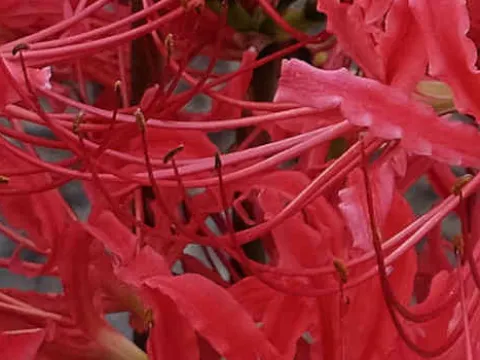
Lycoris
Lycoris
Lycoris belongs to the Amaryllidaceae family and is typically propagated through the division of daughter bulbs that naturally cluster around the parent plant.
What the section contains


Lycoris
The ideal time for planting these bulbs is during their dormancy phase, which typically occurs in late summer or early autumn before the leaves emerge.
Bulbs should be planted at a depth of 10–15 centimeters, ensuring a spacing of at least 20–25 centimeters between individual specimens to allow for adequate growth.
A well-draining substrate is critical; adding a layer of coarse sand or grit at the bottom of the planting hole helps prevent moisture stagnation around the bulb.
Applying a layer of organic mulch after planting is highly recommended to protect the bulbs from temperature fluctuations during the initial establishment period.
Native to East Asia, including China, Japan, and Korea, Lycoris thrives in environments that replicate its natural subtropical habitat with distinct seasonal changes.
The plant requires loose, well-draining soil with a neutral to slightly acidic pH, as heavy clay soils tend to hold excessive moisture that leads to bulb decay.
Lycoris prefers semi-shaded locations, such as under the canopy of deciduous trees, where it is shielded from the harsh intensity of direct midday sun.
Watering requirements are specific: consistent moisture is needed during the active leaf-growing season, but the soil must remain dry throughout the summer dormancy phase.
While the plant is hardy in many zones, it may require winter protection or greenhouse cultivation in regions characterized by severe and prolonged ground frosts.
The primary threat to Lycoris is fungal rot, which is almost always a consequence of poor drainage or overwatering during the plant's dormant cycle.
Pests such as the narcissus bulb fly and various species of nematodes can cause significant damage by feeding on the bulb tissue, weakening the entire plant.
An infestation of pests often manifests as stunted growth, yellowing foliage, or a complete failure of the plant to produce its signature umbrella-shaped inflorescences.
Integrated pest management, including the use of treated planting stock and the removal of infected plant material, is essential for maintaining a healthy collection.
Regular monitoring of the planting site for early signs of disease is a standard horticultural practice to prevent the spread of soil-borne pathogens.
As Lycoris is primarily an ornamental crop, harvest in a traditional agricultural sense refers to the lifting of bulbs for propagation or transplantation purposes.
Lifting should only be performed after the foliage has fully withered, indicating that the bulb has successfully stored nutrients for the next growing season.
Once lifted, the bulbs should be cleaned of soil, inspected for disease, and air-dried in a shaded, well-ventilated location to prevent surface fungal growth.
For storage, bulbs can be kept in a cool, dry environment, such as a box with slightly damp peat moss or perlite, at temperatures ranging from 10 to 12 degrees Celsius.
Floral harvest of the flower scapes is also practiced for cut-flower production, as they possess a long vase life and high aesthetic value in professional floristry.