
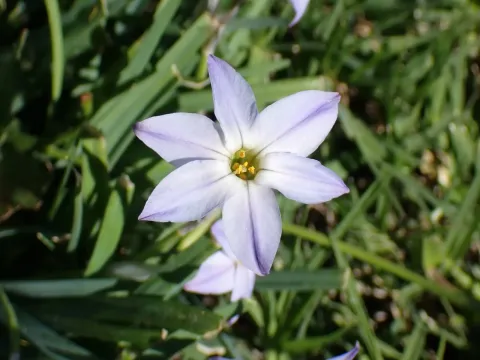
Ipheion
Ipheion Raf.
Planting Ipheion bulbs in open soil should typically occur in late summer or early autumn to allow for proper root establishment before the winter dormant season.
What the section contains

Ipheion
The recommended planting depth is generally 5 to 8 centimeters, adjusted based on the size of the bulb and the texture of the soil profile.
Proper spacing, usually 10–15 centimeters apart, is essential to ensure adequate airflow and nutrient uptake for each plant cluster.
Propagation is most effectively achieved by separating the offsets (small bulbils) from the parent bulb during the dormant phase when foliage has died back.
Stored bulbs must be kept in a cool, dry, and well-ventilated environment to maintain dormancy and prevent the development of physiological disorders during storage.
Ipheion is a genus of bulbous perennial plants belonging to the Amaryllidaceae family, originally native to regions of South America.
These plants thrive in full sun conditions but can tolerate partial shade, which is beneficial in regions experiencing intense summer heat levels.
Well-draining, nutrient-rich soil is a prerequisite for successful cultivation, as these bulbs are highly susceptible to rot in poorly aerated or waterlogged conditions.
Irrigation management is critical; plants require consistent moisture during their active growing season but need dry conditions during their summer dormancy.
In colder climates, applying a thick layer of organic mulch in late autumn is necessary to protect the underground bulbs from deep frost penetration.
The primary threats to Ipheion include fungal diseases such as basal rot and various types of root rot, often triggered by excessive soil moisture and poor drainage.
Improper storage conditions can lead to the proliferation of mold and bacterial pathogens, which rapidly degrade the quality of the planting material.
Common agricultural pests like bulb mites or onion flies can cause significant damage to the bulb tissue, weakening the plant's structural integrity.
Preventative strategies include treating bulbs with systemic fungicides prior to planting and ensuring the chosen site has optimal drainage characteristics.
Early identification of damaged foliage and bulb rot is essential for effective mitigation, requiring immediate removal of infected specimens to protect healthy crops.