
Ipheion uniflorum
Ipheion uniflorum (Lindl.) Raf.
Description
Sowing dates
Planting of Ipheion uniflorum bulbs is typically performed in early autumn, allowing the roots to establish well before the soil temperatures drop significantly.
In regions with harsh climates, bulbs can be planted in the early spring, although this may result in a shorter flowering period during the first season.
Bulbs should be placed at a depth of approximately 5 to 8 centimeters, with adequate spacing of 5–10 centimeters to allow for natural clumping and multiplication.
Propagation is most efficient when carried out after the foliage has naturally withered, allowing the gardener to divide the crowded bulb clusters easily.
Proper site preparation including soil loosening is essential to encourage deep root growth, which serves as a foundation for successful spring blooms.
Growing requirements
Ipheion uniflorum is a member of the Amaryllidaceae family and originates from South America, where it thrives in varied climates ranging from temperate to subtropical.
The plant requires well-draining soil rich in organic matter to prevent bulb rot, which is the most common cause of failure in cultivation for this species.
While the plant is quite versatile regarding sunlight, it prefers full sun to light shade to achieve the most vibrant and numerous floral displays.
Moisture management is key: the soil should be kept moderately moist during the active growth phase, but kept significantly drier during the summer dormancy period.
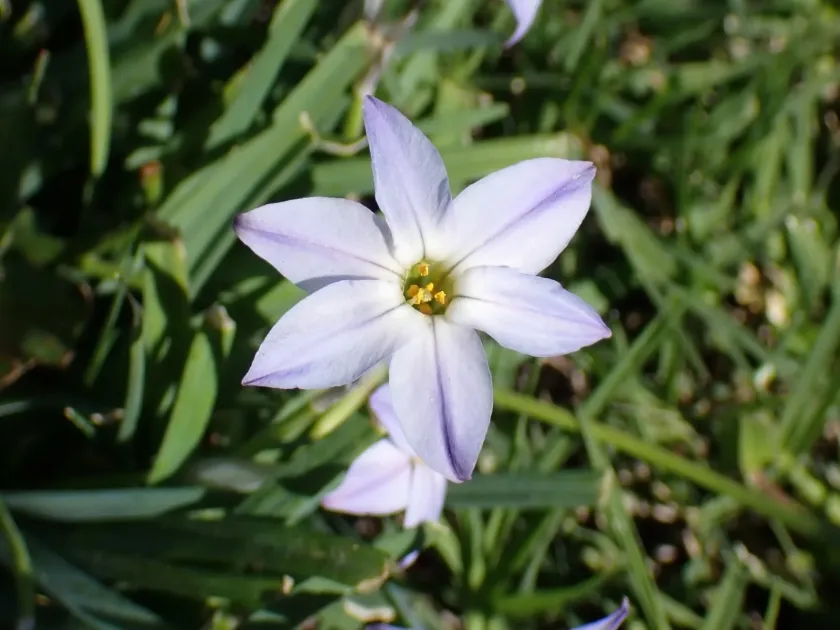
Botanically, the plant is characterized by its distinct fragrance, grassy foliage, and solitary, star-shaped flowers that appear in early spring, often carpeting the ground.
Main diseases and pests
The primary threats to Ipheion uniflorum are fungal infections, particularly basal rot and fusarium, which are almost exclusively linked to poor drainage and waterlogging.
Pests such as bulb mites and various species of flies can damage the bulb tissue, making the plant susceptible to secondary infections and nutrient deficiencies.
To maintain a healthy crop, gardeners should avoid overcrowding and ensure that the soil remains airy, reducing the prevalence of moisture-loving pathogens.
Integrated pest management, including regular observation and the removal of infected plant parts, is recommended to keep the bulb population healthy over several years.
- Use of grit or sand for improved drainage.
- Avoidance of over-fertilization with high-nitrogen products.
- Routine inspection of bulbs before seasonal planting.