
Hymenocallis tubiflora
Hymenocallis tubiflora
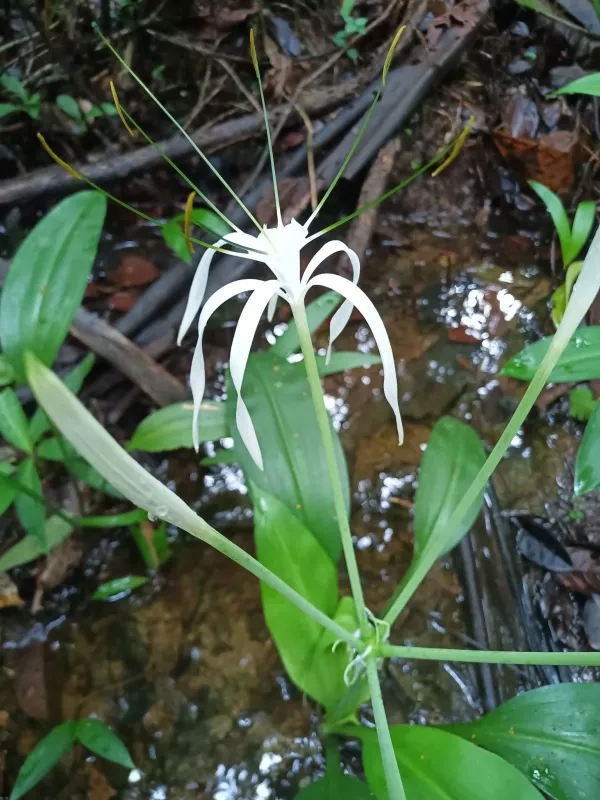
Description
Growing requirements
Hymenocallis tubiflora is a notable species within the Amaryllidaceae family. This perennial bulbous plant originates from the tropical rainforests of South America, where it thrives in shaded and humid environments.
Botanically, it is defined by its substantial bulbs and long, strap-shaped leaves that grow in basal rosettes. Its most striking feature is the highly specialized flower structure with long, delicate tepals, giving it a distinctive spider-like appearance.
The plant requires a rich, well-draining soil mixture to prevent bulb rot. A porous substrate, often based on peat or leaf mold with perlite, is recommended to ensure adequate root aeration and moisture balance.
Climate requirements for this culture include consistent warmth, ideally between 20°C and 26°C. It is highly sensitive to frost and sudden temperature drops, which can lead to metabolic dormancy or severe tissue damage.
Regarding moisture, Hymenocallis tubiflora prefers high relative humidity. Regular watering is essential during the growth season, though the soil must never remain waterlogged, as this quickly promotes fungal pathogens.
Main diseases and pests
The most common threats to the health of Hymenocallis tubiflora include root and bulb rot caused by excessive moisture levels or poor drainage systems in the growing container or field.
Pests such as spider mites and mealybugs frequently target the plant, especially in controlled environments where air circulation is insufficient and humidity is uneven.
Fungal infections, particularly those resulting in red blotch disease typical for Amaryllidaceae, require immediate application of systemic fungicides to prevent the spread of the pathogen.
Integrated pest management strategies should be employed to handle insect infestations, utilizing biological controls or targeted insecticides to minimize chemical residue on the plant tissues.
To maintain a robust crop, growers should implement a strict inspection regime, focusing on the undersides of leaves and the soil surface for early signs of pest or disease emergence.