
Elwes snowdrop
Galanthus elwesii Hook. f.
Description
Sowing dates
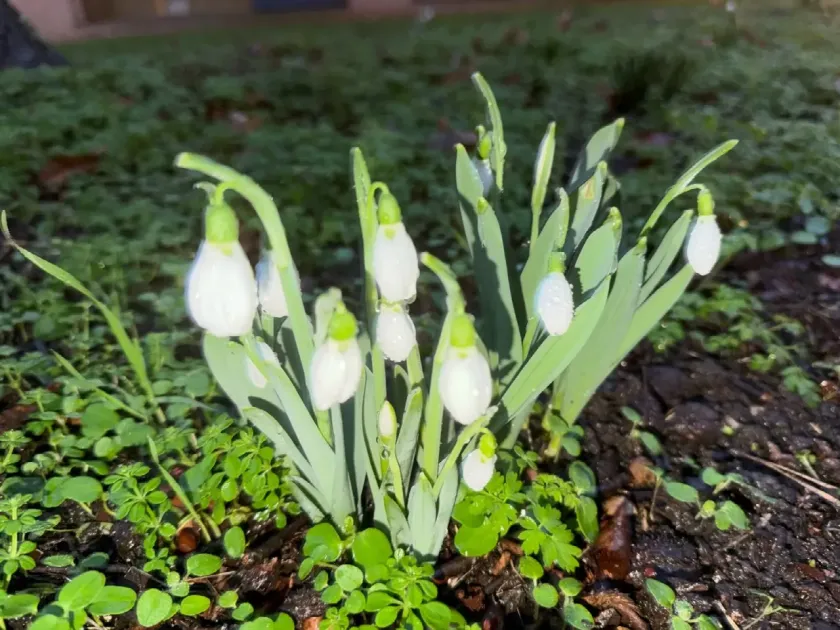
The Elwes snowdrop (Galanthus elwesii) is a member of the Amaryllidaceae family. It is a perennial bulbous plant characterized by large, broad, glaucous leaves and a distinct green marking on the inner petals.
The optimal time for planting these bulbs is in late summer or early autumn. As the bulbs are prone to drying out, they should be planted as soon as possible after acquisition to ensure successful establishment before the onset of winter.
Bulbs should be placed at a depth of approximately 8 to 10 cm in well-worked soil. Planting too shallow can result in desiccation, while excessive depth may delay spring emergence and flowering.
For a naturalized look, space the bulbs 10 to 15 cm apart. This density allows for the formation of healthy clumps while ensuring adequate nutrient availability for each individual plant.
While propagation via seeds is possible, it is a slow process that requires patience, as the seedlings typically take several years to reach maturity and produce their first flowers.
Growing requirements
This species is native to mountainous regions in Turkey and surrounding areas. It thrives in locations that receive full sun in early spring but provides shade as leaves of deciduous trees emerge later in the season.
Well-drained soil is essential for the longevity of the bulbs. They perform best in humus-rich, moisture-retentive but not waterlogged substrates; heavy clay soils should be amended with sand or grit to improve aeration.
Elwes snowdrop is quite hardy, being well-adapted to cold climates. It requires a distinct period of winter chilling to initiate spring growth and successful flower development.
Maintenance involves keeping the soil moist during the growing season. Once the foliage begins to yellow and die back, the plants enter dormancy and prefer drier conditions until the following spring.
Minimal fertilization is required for this plant. A top-dressing of well-composted organic matter or a balanced slow-release fertilizer applied after flowering is sufficient to support vigor for the next cycle.
Main diseases and pests
Grey mold (Botrytis galanthina) is the most significant disease affecting snowdrops. It typically appears during damp, cool springs, causing the foliage to collapse and decay rapidly.
Bulb rot, often caused by pathogenic fungi or soil-borne bacteria, is common in sites with poor drainage. Proper site selection and avoiding excessive irrigation during dormancy are the best preventative measures.
Nematodes are a persistent threat, causing stunted growth, leaf distortion, and internal tissue browning. Affected bulbs must be destroyed to prevent the spread of these microscopic pests to adjacent plants.
Wildlife such as mice and voles can cause considerable damage by consuming the nutritious bulbs during winter. Installing wire mesh cages or hardware cloth can provide effective physical barriers.
Routine garden sanitation, including the prompt removal of decaying plant debris and the isolation of unhealthy specimens, is vital to maintaining a vigorous and disease-free snowdrop population.