
Malephora crocea
Malephora crocea
Description
Growing requirements
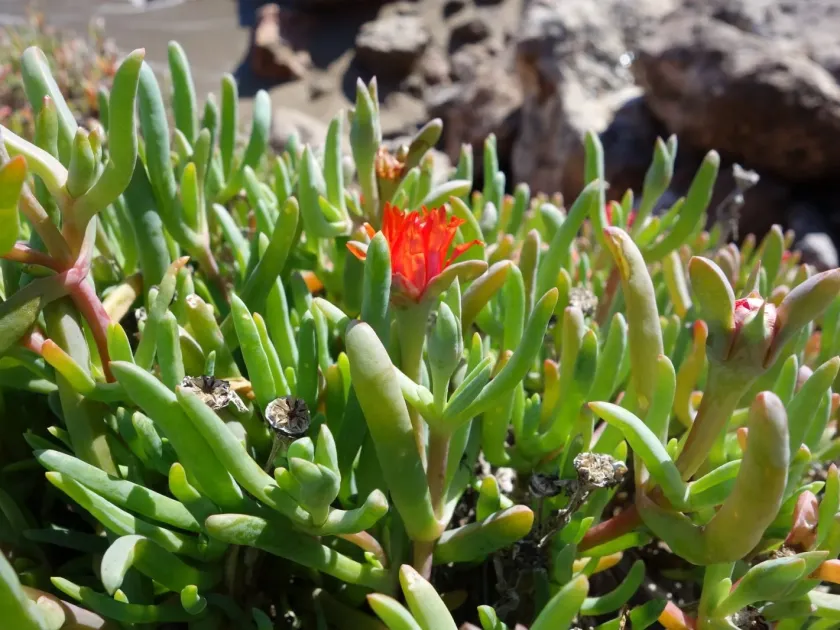
Malephora crocea is an evergreen perennial plant belonging to the Aizoaceae family. It is a well-known succulent characterized by its fleshy, triangular leaves and vibrant saffron-orange daisy-like flowers that bloom profusely throughout the growing season.
Originating from South Africa, this species is highly adapted to arid and semi-arid environments. Its succulent nature allows it to store water efficiently, making it a premier choice for xeriscaping and sustainable gardening practices in dry regions.
The plant thrives under full sun exposure, which is essential for maintaining its compact growth habit and encouraging maximum flowering. In shaded conditions, the plant tends to become leggy and loses its aesthetic appeal, often showing a marked reduction in flower production.
It is not particularly demanding regarding soil composition, provided that the soil is exceptionally well-drained. It performs best in sandy or gravelly soils with a neutral pH, and it is highly sensitive to waterlogged conditions, which often cause rapid root decay.
Malephora crocea is tender and sensitive to frost, generally failing to thrive in temperatures below freezing. In colder climates, it is typically grown as a container plant or a seasonal annual, requiring protection during winter months to survive the cold season.
Main diseases and pests
The most significant threats to Malephora crocea are fungal diseases triggered by excessive moisture or poor drainage. Root and stem rot are the primary causes of failure, often resulting from over-irrigation or planting in heavy, clay-based soils that retain too much water.
Pests such as mealybugs and spider mites are known to infest the plant, particularly when it is already under stress from improper care. These insects sap the plant's vitality, leading to discolored leaves and an overall decline in health.
Effective pest management involves the use of systemic insecticides, though care must be taken to prevent damage to the succulent's delicate leaves. Biological controls are also a viable option and are generally preferred for large-scale landscape applications.
Prophylaxis against disease is best achieved through strict irrigation management and ensuring proper air circulation between plants. Avoiding overhead watering can significantly reduce the risk of fungal spores taking hold on the foliage during humid periods.
Prompt removal of any infested or diseased plant material is essential to prevent the spread of pathogens. By keeping the planting site clean and well-ventilated, growers can ensure the long-term viability and beauty of their succulent ground cover.
Harvesting
In agricultural and landscape settings, Malephora crocea is primarily utilized as a ground cover plant. Its dense growth habit makes it highly effective at stabilizing slopes and preventing soil erosion, particularly on hillsides where other vegetation might struggle.
It is widely used in urban landscaping projects in Mediterranean-type climates, such as those in California. The plant is valued for its extreme drought tolerance and the ability to maintain a lush appearance even with minimal supplemental irrigation once established.
Propagation is most commonly achieved through stem cuttings. These cuttings root very easily in a light, well-draining medium, allowing gardeners to quickly propagate large quantities of material to cover vast areas of land with relatively low effort.
Seed propagation is possible but is less common due to the slower development compared to cuttings. Seeds require a consistent temperature and a light covering of soil to germinate successfully, with gradual hardening off before being planted in final locations.
Regular maintenance involves occasional trimming to keep the plants tidy and to promote denser growth. This simple agronomic practice ensures that the carpet remains uniform and provides a continuous display of its iconic orange flowers throughout the warmer months.