
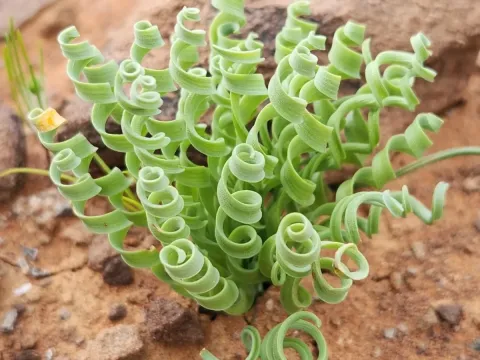
Albuca concordiana
Albuca concordiana
Albuca concordiana is a bulbous plant species belonging to the Asparagaceae family, native to the arid rocky regions of South Africa. It is highly valued in horticulture for its unique, corkscrew-shaped leaves that spiral tightly under proper cultivation conditions.
What the section contains
Albuca concordiana
The plant exhibits a distinct growth cycle, entering dormancy during the summer months when the foliage dies back completely. During the growing season, it produces a bulb that requires well-drained, nutrient-poor soil to prevent rot and ensure healthy development of its delicate root system.
Light intensity is the most critical environmental factor; without direct, bright sunlight for several hours a day, the leaves will lose their characteristic spiral pattern and become limp and elongated. Proper placement, such as a south-facing windowsill, is essential for maintaining aesthetic appeal.
The substrate must be highly porous and inorganic. A mixture containing substantial amounts of coarse sand, perlite, or pumice is necessary to ensure rapid water drainage and prevent the root zone from staying wet, which is the primary cause of plant loss in cultivation.
Watering should be approached with caution, allowing the substrate to dry out almost completely between sessions. During the dormant period, water must be withheld entirely to simulate the natural desert environment, preventing fungal proliferation within the bulb tissues.
Root rot and bulb decay are the most prevalent threats, typically resulting from overwatering or poorly draining soil media. These pathogens thrive in stagnant moisture, leading to the rapid disintegration of the root system and eventual death of the bulb.
Pest issues include infestations of mealybugs and spider mites, which find refuge in the intricate curls of the leaves. Controlling these pests can be challenging due to the physical structure of the foliage, necessitating regular inspections and the use of targeted acaricides or insecticides.