
Albuca dilucula
Albuca dilucula
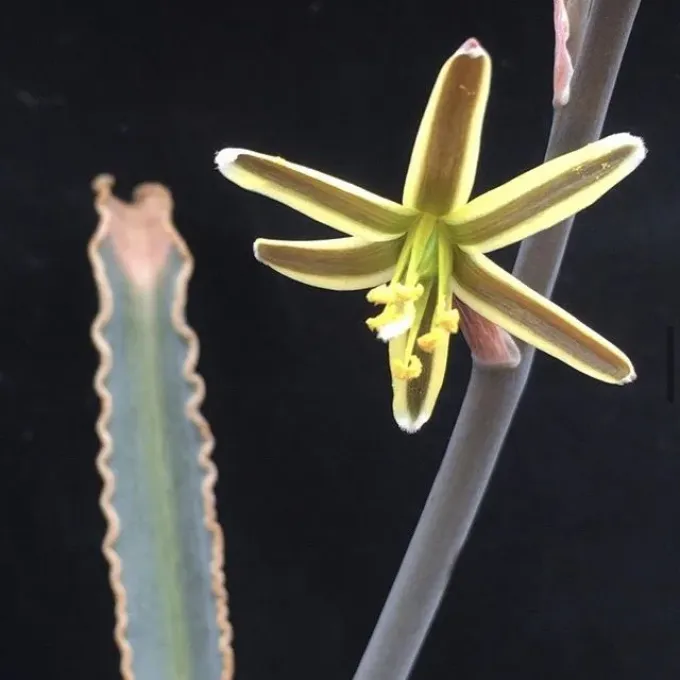
Description
Growing requirements
Albuca dilucula is a rare bulbous plant belonging to the Asparagaceae family. This succulent perennial is native to the arid regions of Southern Africa, where it has adapted to specific climatic conditions characterized by cycles of drought and brief moisture.
Botanically, the plant is defined by its subterranean bulb, which serves as a vital storage organ for nutrients and water. Its leaves are typically linear or channeled, an evolutionary adaptation designed to minimize transpiration and survive high-temperature exposure.
Successful cultivation requires bright, filtered sunlight. Exposure to harsh, direct midday sun can result in leaf scorching; therefore, providing light shade or placing the plant in an orientation with morning sun is essential for leaf health.
The substrate must have excellent drainage properties. A growing medium composed of loam mixed with coarse sand, perlite, or grit is necessary to ensure that moisture does not remain stagnant around the bulb, which is prone to rot.
Temperature management should follow the plant's natural rhythm. During the growing season, moderate warmth is preferred, while a cooler, dry period is essential to induce dormancy and support the development of future flowering spikes.
Main diseases and pests
Overwatering is the primary threat to Albuca dilucula, frequently causing bulb rot and root decay. If the soil remains saturated for too long, the plant becomes highly susceptible to fungal and bacterial pathogens that can cause total collapse.
Common pests include mealybugs and spider mites, which typically target the plant when ambient humidity is excessively low or when poor air circulation is present. Regular inspection of leaf bases is critical for early detection.
Management of pests involves the careful application of systemic insecticides. However, it is imperative to avoid increasing soil moisture during treatment, as the roots are delicate and sensitive to chemical and water stress.
The plant is also sensitive to physiological stress caused by sudden temperature shifts coupled with humidity, which may lead to secondary infections like late blight. Moderate fertilization is recommended to prevent excessive vegetative growth that weakens the plant.
Annual or biennial repotting into fresh, well-aerated substrate is a best practice in domestic cultivation to prevent salt accumulation and ensure the root system has optimal access to oxygen and nutrients.