
Albuca bracteata
Albuca bracteata
Description
Growing requirements
Albuca bracteata, widely known as the "pregnant onion" or "false sea onion," is a member of the Asparagaceae family. This bulbous perennial is native to South Africa, where it thrives in rocky terrain and regions with distinct wet and dry seasons.
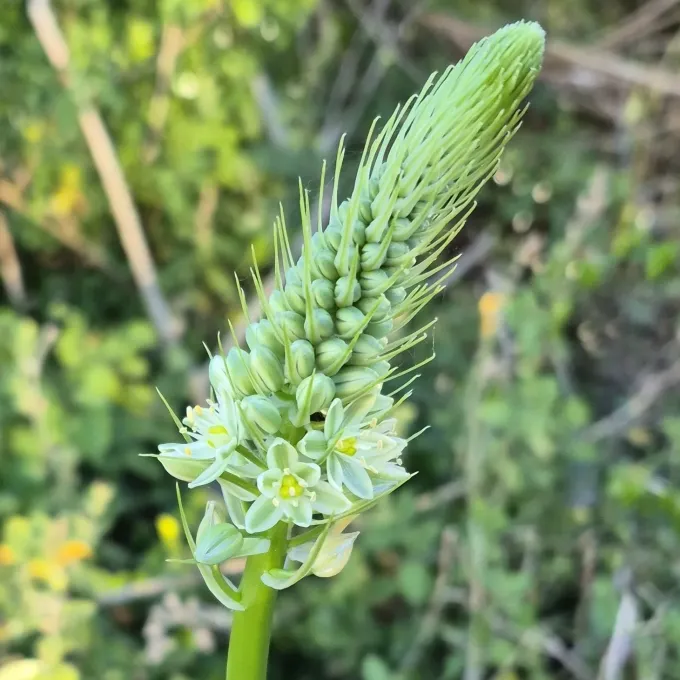
The plant is easily recognized by its large, globose bulb that sits primarily above the soil surface and turns bright green with age. It produces long, strap-like leaves and produces spikes of numerous white-green flowers with distinctive bracts.
To cultivate Albuca bracteata successfully, growers should provide bright, indirect sunlight. While the plant can tolerate some direct morning sun, intense midday light may cause leaf tip scorch or damage to the succulent bulb.
The substrate must be extremely well-draining. A mix consisting of standard potting soil supplemented with pumice, perlite, or coarse sand is recommended to mimic the plant's natural arid habitat and ensure proper aeration.
During the active growth phase, keep the soil lightly moist but never waterlogged. As the plant enters its natural dormancy, reduce watering significantly to allow the bulb to rest, which is essential for healthy development and future flowering.
Main diseases and pests
The most significant threat to Albuca bracteata is bulb rot, which is almost always caused by overwatering or the use of poorly draining soil that retains excessive moisture for too long.
Common indoor pests include mealybugs and spider mites, which can easily hide in the dense clusters of leaves or near the base of the bulb, sucking plant sap and weakening the specimen.
To maintain plant health, it is advisable to keep the foliage clean and ensure good airflow around the bulb, which discourages both fungal infections and pest infestations.
If rot is detected, the affected parts of the bulb should be surgically removed with a sterile blade, and the wound must be allowed to callous over before replanting in fresh, dry medium.
Regular inspection of the root system during repotting is essential for long-term survival, as it allows the grower to detect early signs of stress before they become lethal to the bulb.