
Albuca amoena
Albuca amoena
Description
Growing requirements
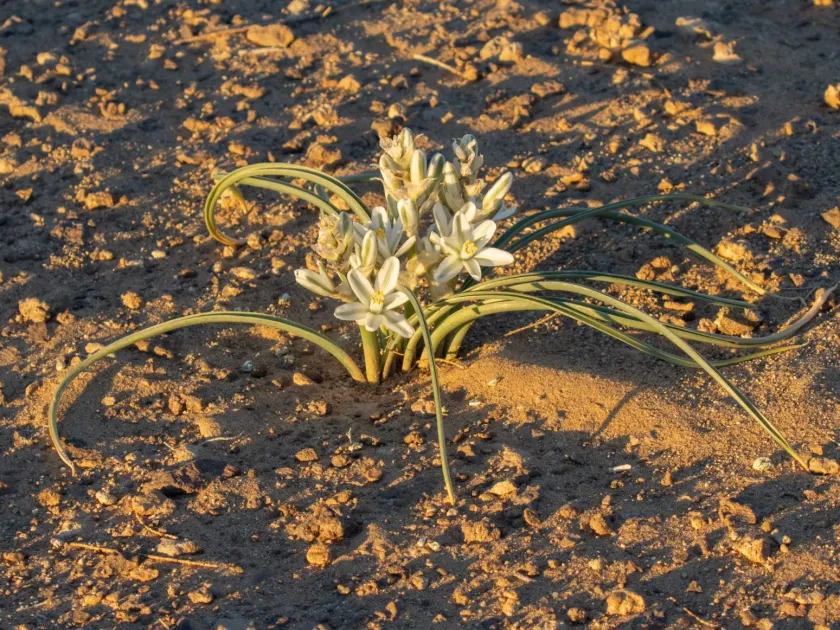
Albuca amoena is a bulbous perennial plant belonging to the Asparagaceae family. Native to South Africa, it is primarily found in arid and semi-arid rocky habitats, which explains its high tolerance to fluctuating moisture levels and preference for well-drained soils.
The plant grows from a distinct bulb, producing a rosette of slender, channelled leaves. Its most remarkable feature is the inflorescence, consisting of nodding, bell-shaped flowers that often exhibit a sweet, pleasant fragrance during the flowering season.
Optimal growth requires high light intensity. In a greenhouse or indoor setting, Albuca amoena should be placed in the brightest possible location to ensure structural integrity of the leaves and to promote healthy flower development.
The soil structure is vital for preventing root rot, the most common failure in cultivating this species. An ideal potting mix should consist of coarse sand, perlite, and a small portion of organic matter to allow for rapid drainage and aeration of the root system.
The watering regime follows the plant’s biological cycle. During the growing season, water should be applied moderately. As soon as the foliage begins to show signs of dormancy, irrigation must be strictly reduced or suspended until the next growth cycle begins.
Main diseases and pests
Root and bulb rot are the primary threats to Albuca amoena, usually caused by overwatering or poor soil drainage. These pathogens can rapidly destroy the bulb tissues, leaving the plant unsalvageable if not detected early.
Mealybugs are common pests that hide in the tight spaces between leaf bases. They feed on plant sap and can weaken the plant over time, requiring systematic insecticide applications to manage the infestation effectively.
Spider mites represent a risk, particularly in environments with low humidity. Infested plants show fine webbing and stippling on the leaves, which can be managed by adjusting humidity levels and using appropriate acaricides.
Fungal leaf spot can occur if there is insufficient air circulation in the growing area. Ensuring a good flow of air around the plant canopy helps keep the leaves dry and reduces the pressure from airborne fungal spores.
Root-knot nematodes can also affect the subterranean parts of the plant, causing stunted growth and poor vitality. Using sterilized, high-quality soil components is the best preventative strategy against these soil-borne threats.