
Albuca hallii
Albuca hallii
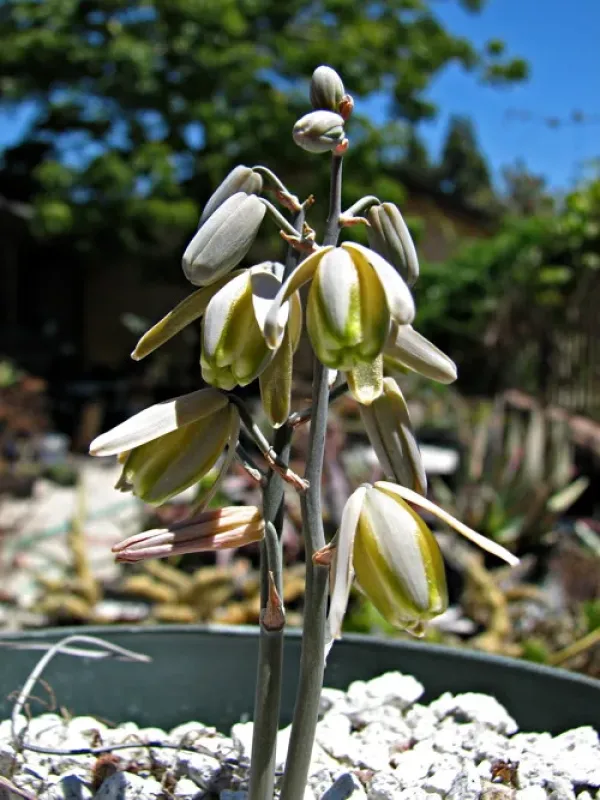
Description
Sowing dates
Albuca hallii belongs to the Asparagaceae family and is a distinctive bulbous succulent originating from the arid regions of Southern Africa.
Seed propagation is the primary method of cultivation, usually performed in late winter to ensure seedlings have enough time to mature before dormancy.
The ideal substrate for sowing is a highly porous mix composed of coarse sand, perlite, and a small amount of fine peat to maintain essential moisture levels.
Seeds should be covered with a very thin layer of substrate and placed in a warm, bright environment to stimulate uniform germination within several weeks.
Proper aeration is vital during the germination phase, so covering trays with perforated plastic is recommended to maintain humidity without stagnation.
Growing requirements
This species requires high light intensity throughout the growing season to maintain its characteristic morphology and prevent etiolation of the leaves.
The soil must have excellent drainage properties, as Albuca hallii is highly susceptible to root rot if the roots are exposed to standing water for too long.
A distinct cycle of growth and dormancy is necessary; during the dormant phase, the plant requires cooler temperatures and significantly reduced water supply.
Environmental conditions should mimic its natural habitat, which is characterized by sunny days and significantly lower temperatures during the night hours.
Fertilization should be applied sparingly, preferably with a balanced fertilizer diluted to half-strength, exclusively during the peak of the growth cycle.
Main diseases and pests
Fungal pathogens represent the primary threat to the health of the bulb, often triggered by overwatering or poor ventilation in the growing environment.
Mealybugs are common pests that target the base of the leaves, sucking the plant sap and potentially weakening the overall structure of the bulbous plant.
Spider mites can proliferate if the ambient humidity is kept too low, leading to the yellowing and eventual death of damaged leaf tissue.
Integrated pest management, including the use of neem oil or targeted acaricides, is the recommended approach to maintaining a healthy collection.
Consistent monitoring and the implementation of proper drying cycles between waterings are the most effective preventive measures against major pathogens.