
Veltheimia
Veltheimia
Veltheimia is a genus of bulbous perennial plants within the Asparagaceae family. Native to South Africa, these plants are well-adapted to environments characterized by winter rainfall and hot, dry summers, which defines their unique growth cycle.
What the section contains


Veltheimia
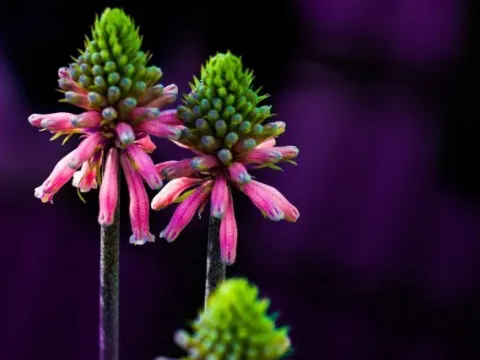
The plant features a prominent, often spherical bulb that produces a rosette of undulating or wavy-edged leaves. The hallmark of the species is its spectacular inflorescence, which consists of a dense raceme of tubular, pendulous flowers in shades of pink, red, or yellow.
Cultivation requires a well-draining, porous potting mix. A mixture consisting of loam, leaf mold, and sharp sand is ideal for promoting healthy root development while preventing moisture retention that could be fatal to the bulb.
Temperature management is crucial for the health of the plant. Veltheimia performs best in cool conditions, preferably between 10°C and 18°C. During the active growing season, it requires bright, indirect light to ensure strong stems and vibrant blossoms.
The lifecycle includes a necessary dormancy period during the summer months. Once the foliage begins to yellow and die back, watering must be significantly reduced or completely stopped. The bulbs should be kept in a cool, dry place until the new growth begins in the autumn.
The primary threat to Veltheimia is bulb rot, which is almost always caused by poor soil drainage or excessive watering. If the bulb remains saturated for an extended period, the tissues begin to decay, often becoming irreparable.
Common indoor pests, such as mealybugs and aphids, frequently target the succulent leaves of the plant. They thrive in protected environments and can rapidly multiply, causing stunted growth and poor flower production.
Spider mites are another significant pest, especially in environments with low humidity levels. These microscopic pests feed on cell sap, leading to the yellowing of foliage and fine webbing that can cover the plant if left unchecked.
Effective pest management involves regular monitoring and the use of appropriate chemical controls when necessary. Systemic insecticides can be effective, but their application should be carefully timed to avoid harming the plant's delicate tissues.
Preventative care is the most effective strategy against diseases. This includes using sterilized soil, maintaining proper airflow, and strictly avoiding overhead watering, which can trap moisture in the leaf rosettes and promote fungal growth.