
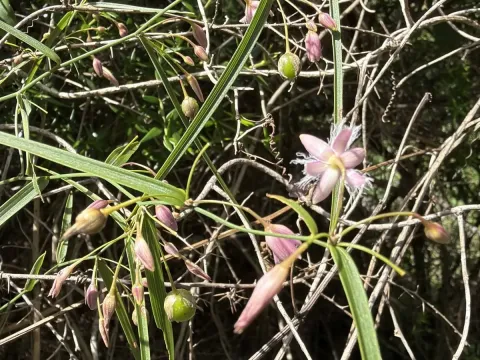
Wombat berry
Eustrephus
Eustrephus latifolius, commonly known as Wombat berry, is a perennial evergreen climber that belongs to the Asparagaceae family. This plant is native to the eastern parts of Australia, where it naturally thrives in coastal forests and rainforest fringes.
What the section contains

Wombat berry
Botanically, the plant is characterized by its tuberous roots, which act as storage organs for energy and nutrients. These tubers allow the vine to survive in diverse Australian climates, effectively buffering the plant against seasonal dry spells.
To cultivate Wombat berry successfully, it is essential to mimic its natural habitat. The plant prefers semi-shaded conditions where it can receive filtered sunlight rather than direct, harsh exposure throughout the day.
The soil requirement involves a well-draining, nutrient-rich substrate. A slightly acidic to neutral pH level is ideal for healthy root development, and organic matter should be added to ensure moisture retention without causing waterlogging.
Regarding climate, this species is suited for warmer temperate and subtropical regions. It is sensitive to severe frost and requires protection or indoor cultivation if temperatures drop significantly during winter months.
In terms of usage, Wombat berry is primarily valued for its ornamental appeal, featuring delicate flowers and attractive, bright orange or yellow spherical fruit capsules.
The fruit of this plant is technically edible, although it is not produced on a large commercial scale like common agricultural fruits. It provides a sweet, subtle flavor often sought after in bush tucker or permaculture gardens.
The yield of the vine depends heavily on the support structure provided; the more space the plant has to climb and spread, the more flowers and subsequent fruit capsules it can produce.
Propagation is generally performed through seeds or the division of tubers, which allows gardeners to expand their collection effectively over a period of time.
Maintenance involves periodic pruning to prevent the vine from becoming overcrowded, which ensures that the energy is directed towards producing healthy fruit and foliage.
Common threats to Eustrephus latifolius include fungal pathogens that typically emerge in environments with poor ventilation and high atmospheric humidity.
Pests like aphids and mealybugs can occasionally infest the foliage, particularly if the plant is under stress or grown in poor conditions.
Integrated pest management, including regular visual inspection and the use of insecticidal soaps, is usually sufficient to handle these minor infestations.
Root rot is the most significant threat to the plant's survival; therefore, strict adherence to drainage requirements is a critical preventive measure.
Keeping the area under the vine clear of dead plant debris is a recommended practice to minimize the risk of soil-borne diseases that could damage the root system.