
Trecul's yucca
Yucca treculiana
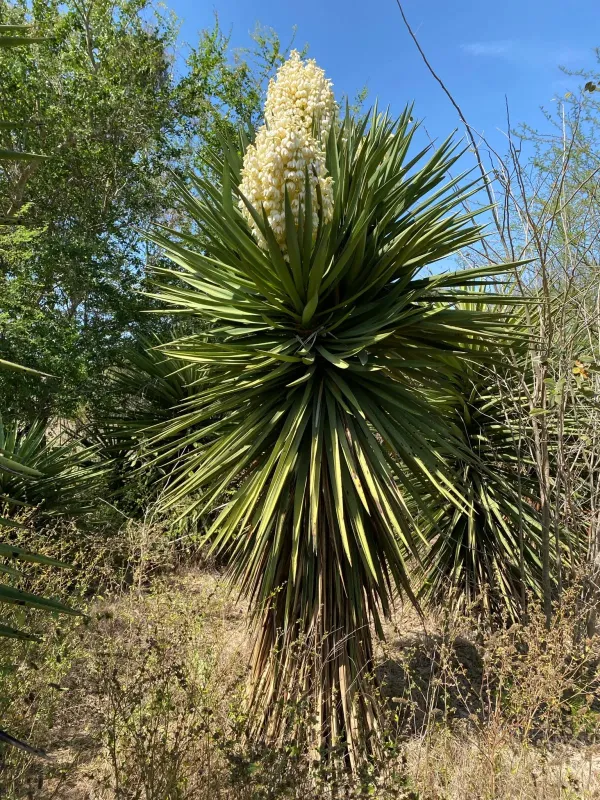
Description
Sowing dates
Yucca treculiana is propagated primarily through seeds or offset division. Seeds require a well-draining, sandy substrate and a germination temperature range of 20 to 25 degrees Celsius.
Seed pretreatment, including soaking or cold stratification, can enhance germination rates significantly. Sowing is best performed in early spring to allow for adequate establishment before summer heat.
Vegetative propagation via offsets is the preferred method for maintaining genetic consistency. Offsets should be carefully removed during the dormant season and allowed to callous before planting.
Proper spacing is crucial to ensure that each plant receives maximum sunlight and airflow, which is essential for healthy development and disease prevention.
When sowing or planting young specimens, ensure that the crown is not buried too deep in the soil, as this often leads to tissue decay and plant mortality.
Growing requirements
Belonging to the Asparagaceae family, Trecul's yucca is a succulent xerophyte native to the arid regions of Texas and Mexico. It is highly adapted to environments with limited water availability.
The plant thrives in well-drained, porous soils. Heavy clay soils are unsuitable, as they retain moisture that promotes root rot, the leading cause of death in cultivated yucca.
Environmental requirements include high solar radiation and moderate to low humidity levels. While it tolerates mild frosts, it is not suited for regions with prolonged, severe sub-zero temperatures.
Cultural management should focus on a dry-to-wet irrigation cycle: water thoroughly but allow the substrate to dry out completely between applications. During winter, irrigation should be strictly limited.
As a slow-growing species, Yucca treculiana requires patience. It develops a thick, woody stem and a rigid rosette of leaves that can grow to impressive heights over several years.
Yield
The primary utility of Yucca treculiana lies in its high-quality, durable fiber. Traditionally, these fibers were extracted from the leaves for use in cordage and textiles.
In ornamental landscaping, the "yield" is measured in the production of massive, white inflorescences that appear on established plants, providing significant aesthetic value.
The plant is also recognized for its bioactive compounds, particularly steroidal saponins, which are studied for their potential use in pharmaceutical and chemical industries.
Given its drought tolerance, the cultivation of this species as a source of biomass in arid regions is a topic of increasing agricultural interest.
Proper harvesting of fiber involves selecting mature, fully expanded leaves, which contain the longest and most resilient vascular bundles for industrial applications.
Main diseases and pests
The most significant threat to Yucca treculiana is root rot caused by fungi such as Phytophthora or Fusarium, often triggered by over-watering or poor soil drainage.
Common pests include scale insects and mealybugs, which hide in the tight crevices of the leaf rosettes. Infestations should be managed with systemic insecticides or horticultural oils.
Spider mites can be a problem in arid, low-ventilation environments. Regular leaf cleaning and monitoring can help detect and prevent population surges.
Leaf spot diseases, often caused by bacterial or fungal pathogens, may occur if plants are kept too crowded, which reduces essential air circulation around the crown.
Integrated pest management strategies for this crop rely on keeping the environment dry, promoting airflow, and conducting regular inspections of the basal foliage.