
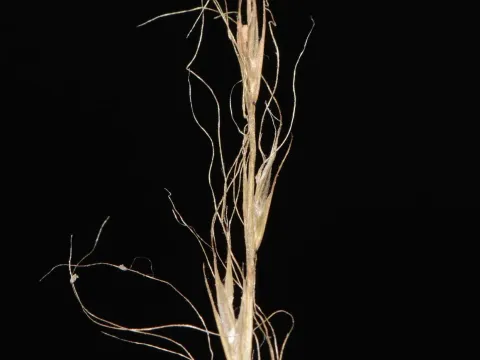
Tripogon
Tripogon
Tripogon is a genus of perennial herbaceous plants belonging to the Poaceae family. Botanically, this crop is represented by low-growing bunchgrasses that are well-adapted to living in specific ecological niches.
What the section contains


Tripogon
Geographically, representatives of this genus are widely distributed in tropical, subtropical, and temperate regions of Africa, Asia, Australia, and America. They are often found on rocky slopes, rocky outcrops, and arid open areas where other grass species cannot survive.
The crop places extremely low demands on soil fertility, often colonizing poor, stony, or sandy substrates. Optimal conditions for their vegetation are well-drained areas where moisture stagnation in the root zone is excluded.
The plant possesses high resistance to prolonged periods of drought, which is due to the peculiarities of its physiology and the structure of its root system. The temperature regime for growth varies from moderate to hot, depending on the specific species and distribution area.
In an agronomic context, the use of Tripogon is limited. In the regions of their natural growth, they can be considered as components of pasture ecosystems, but they are not mass agricultural crops for large-scale industrial cultivation.
Like most wild grasses, Tripogon is susceptible to fungal diseases specific to the Poaceae family, such as leaf rust and various types of smut.
Under conditions of high humidity combined with high temperatures, plants can suffer from root rot, which significantly weakens the development of the sod and reduces the overall vitality of the bush.
Pests typical for this genus include a wide range of insect phytophages: cereal aphids, leafhoppers, and wireworms, which damage the root system and the vegetative mass of the plant.
Since Tripogon is not an object of intensive farming, specialized plant protection systems for it have not been developed, and pest control is usually reduced to the natural regulation of the population within the herb stand.
The biological resistance of the species to pathogens largely depends on the stability of growth conditions: sudden climatic anomalies significantly increase the susceptibility of plants to diseases.